
Lodro Rinzler on the dance between doubting ourselves and believing we're enough
And how becoming a dad influenced his new book on basic goodness


“We’ve forgotten we are gold. We have covered ourselves in layers of focusing on our imperfections, or our flaws, or the thing that we did, where we are never going to let ourselves off the hook for whatever it is. We are taught implicitly, explicitly, that we are not enough as we are. And then we start searching outside ourselves for happiness, contentment, instead of actually saying, ‘Well, if I actually just let go of some of these stories, I could reveal that true golden nature underneath.’ That’s what basic goodness is.” — Lodro Rinzler
While I really revere Buddhist teachers who lived and died before I was born, there is something really special about learning alongside a contemporary. Lodro Rinzler is such a teacher. In our 20s, we both lived in NYC; I took my refuge vows at the meditation center where he taught. At that time, I was grateful for his relatable guidance on things like dating and dealing with hard bosses while Buddhist, as captured in books like The Buddha Walks Into a Bar, published in 2012.
Now, we’ve both moved up into the bucolic, hilly region that stretches from the Hudson Valley, where Lodro lives, to Central MA, where I live. We’re trying to figure out how to build community in our respective rural areas. We’re entering our sandwich generation years, caring for small children while also tending aging adults. And fortunately, once again, Lodro is out with a new book that feels just-right for the times.
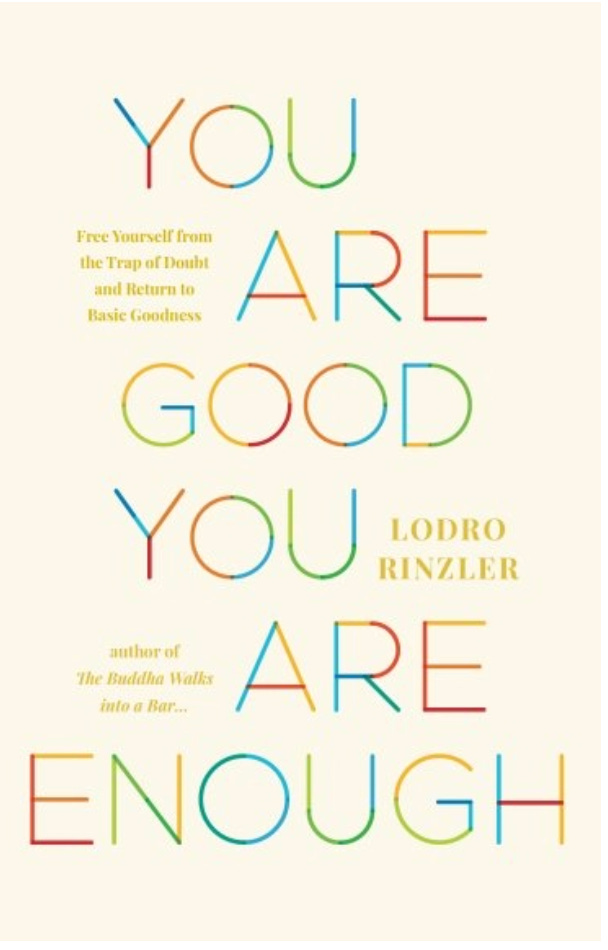
Lodro’s new book is called You Are Good, You Are Enough: Free Yourself from the Trap of Doubt and Return to Basic Goodness. Basic goodness, for the uninitiated, may sound sweet and Dr. Becky-ish—aww, everyone’s good inside! But the way it’s practiced by Buddhists is also quite radical. The Buddhist notion of basic goodness is the theological opposite of the Christian notion of original sin, which is a pretty consequential difference—one Buddhist-leaning parents need to consider if their extended family members expect their babies to get baptized. (I talk about how our mixed-tradition family is processing that one below.) It also invites us to consider that the politicians we dislike, the exes who still dislike us, and society at large are actually not f***’d up, but basically good.
Yeah. I know. I too still have questions. I asked a lot of them in the interview that follows, in which Lodro and I discuss:
What it was like for Lodro to grow up in a flourishing community of meditators
How becoming a parent influenced Lodro’s perspective on basic goodness
How the Buddha himself confronted self-doubt
How a golden Buddha statue became a guiding metaphor for the book
Wrestling with our own inner critics as parents
Removing the “second arrow” of judging ourselves for having a hard time, especially when caring for kids and aging adults simultaneously
How to explain basic goodness to our children
How basic goodness can help us feel less antagonistic toward “society” …
….And also like more effective activists—even when we’re not able to get out in the streets
I also want to note that Lodro’s wife, Adreanna Limbach, is also a meditator and author who has offered me some excellent guidance as a teacher. Please look her up too!
Note: The transcript below has been edited for length and clarity. It may still be cut short by some e-mail clients, so is best viewed in a browser. Alternatively, if you’d like to listen to the full un-cut audio, you can do so here.
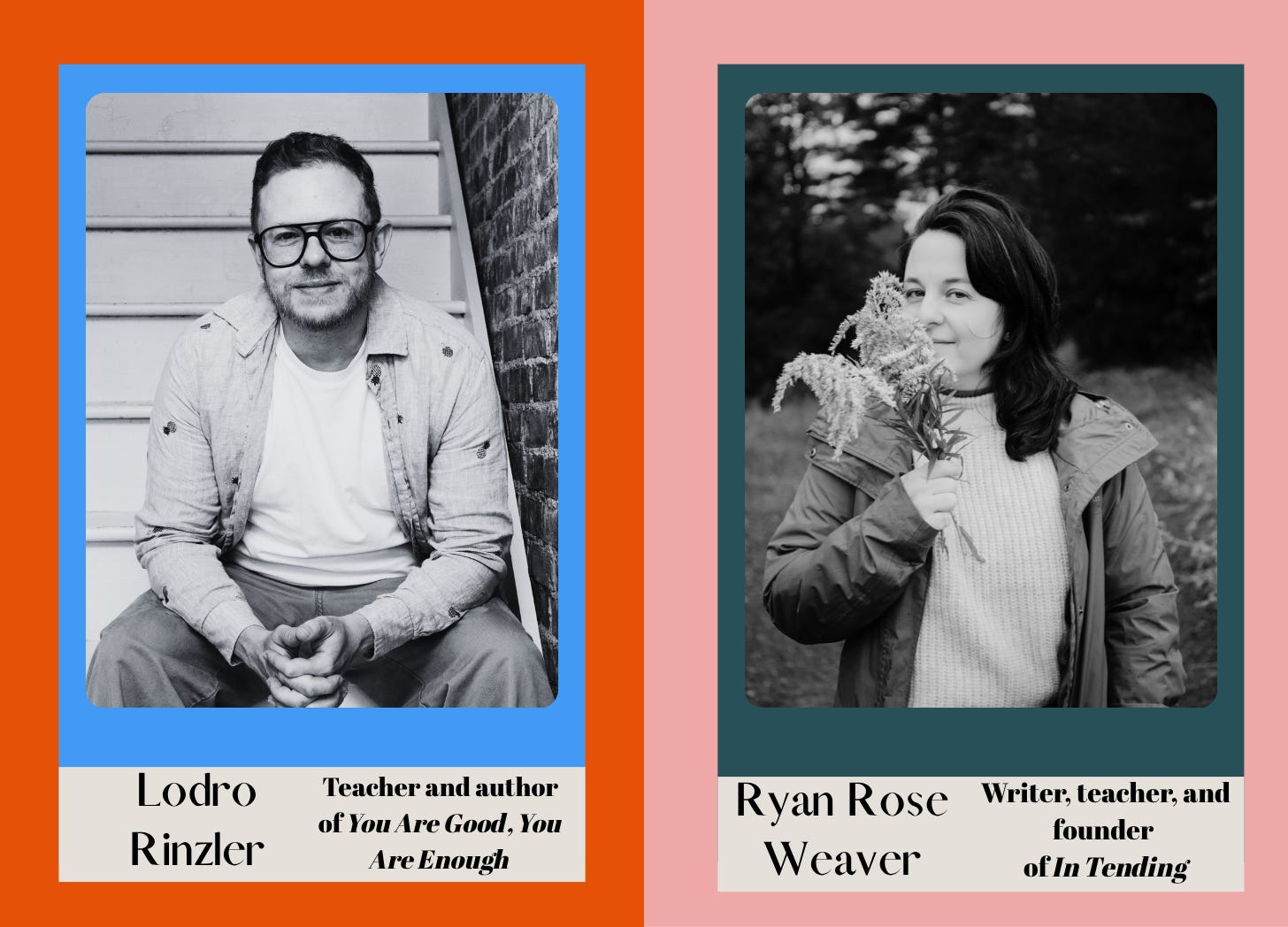
Ryan: Hi, Lodro.
Lodro: Hey, thanks for having me on this thing.
Ryan: Yeah, absolutely. How are you doing?
Lodro: I’m good. I am. But it’s so funny. On my very first book tour, someone invited me to do something in North Carolina, and I was like, yes, I can fit it in. I’ve got all these other plates spinning. And she was a meditation teacher. I’m a meditation teacher. And she said, it’s so interesting, us Buddhists all running around trying to get people to slow down. And I was like, I do feel a little bit like I am running around like crazy trying to get people to slow down.
But I am also slowing down, particularly now that the weather is changing and I can actually take some good fresh air outside.
Ryan: That’s very validating, because I too feel like I am running around very quickly trying to remind people to slow down.
Ryan: So you live in the Hudson Valley now, but where did you grow up?
Lodro: I’m originally from New York City. I was born and raised and we moved upstate when I was 9 years old. My mother—we’ll probably get to this—she’s a little bit older at this point, and she’s living about 20-25 minutes away from here. So we didn’t move up here solely because she’s here, but it is really helpful that we are now here.
On being raised by meditators
Ryan: What was it like for you to grow up in New York City? Particularly as the child of Buddhist meditators, which is a pretty unique experience to have there.
Lodro: Yeah, it is. I don’t have anything to compare it to, obviously, right? But I do recognize that it’s very unique that, as you mentioned, before I was even born, my parents were practicing Buddhism and meditation. So it was in the air when I was growing up, and not something that was ever pushed upon me.
But the story goes, at least this is how my mother tells it, that she found me sitting in darkness facing a wall. Other parents might have gotten creeped out by that sort of thing, but they sort of left me to my own devices.
And at dinner that night, they said, what were you doing? And I said, I was meditating. And they said, explain what that means. And I said, well, I was noticing that I was breathing, and when I got distracted, I came back and noticed that I was breathing. They’re like, yes, that’s it. So I started at a young age.
Growing up in New York City, there was a lot of Buddhist community, believe it or not. I think probably more so than where I am now, for example, in upstate New York. And it felt very vibrant that there was a supportive culture for kids meditating. And there were little meditation things for families, and things like that. So it always was just sort of part of the culture, as opposed to a thing that just my family did, which I think is really unique.
Ryan: That is really unique. And I think one of the reasons why I felt there was the need to create In Tending is that for so many of us, we live in either places that are geographically distant from cities. Or it’s just not the kind of place where there’s a critical mass of contemplative parents and caregivers who want to get together, and maybe chip in on some childcare. I would love to see that blossom into the kind of scene that you’re describing; that’s really wonderful.
Lodro: I’m a big advocate for people creating the communities that they don’t see in the world around them. And I also would go so far as to say all the writing that I do is basically, “Why isn’t anyone having this conversation. We should be having this conversation. I guess we’ll start, right? Right.”
So this has that same quality. I mean, with In Tending, people go to it—I go to it—for the types of conversations that we’re not having elsewhere. And I think it’s really beautiful what you’re building.
Ryan: Thank you so much. That’s really high praise coming from you.
I’m curious just to hear more about this community that was so supportive of kids when you were growing up. What did that look like just logistically? How did the grown-ups make it happen? What was it like to be a kid in that community?
Lodro: It was admittedly a lot of like, “Okay, the adults are going to go do the serious meditation thing in the other room. Someone’s got to stay behind and hang out with the kids.”
Michael Carroll was one of those guys who was like, “You know what, I’ll stay behind with the kids.” And very sweetly, he would take us out and do basic open awareness mindfulness stuff with the kids. Where he’d say, “What do you notice? What do you gravitate towards on the street of New York What colors do you notice? What do you see? How do you engage with your world?”My mother always jokes that that means that we basically ended up playing with trash.
Many years later, I reconnected with him. And he is such a wonderful mentor to me at this point. That was when I was 3 to 6 years old, and now I’m 43, and that’s an incredible relationship to have still. This person’s not just like, “Oh, I remember you when you were a kid, and I used to let you play with trash,” but also, “I have noticed certain things about you over these decades, and I’m going to sort of reflect them to you and see what you think.” I’m very thankful for that relationship now.
Ryan: That truly is a very singular and amazing relationship to have had.
I’m also trying to picture that trash on the street. What part of New York City was that?
Lodro: I was in the Upper East, and I think that was more Midtown at that point that people were gathering.
Ryan: Midtown East, West?
Lodro: Ryan. I was 3 to 6 years old.
Ryan: Okay, fair enough. You’re like, “I think, I think there was a park, maybe.” So I’m picturing, you know, like bagel wrappers and coffee cups.
I ask because I once taught at a very fancy private school in Midtown overlooking the park. And do you know what we were doing for fifty grand a year inside? We were playing with trash.
Lodro: No.
Ryan: We were doing “junk construction.” It’s like, a whole thing. So, you were getting the finest education that New York City could provide.
And in addition, having this wonderful elder in your life. Like, God bless the people that will stay with the kids so that the grownups can meditate, right? I think we need that ingredient, for sure, in the communities that we’re building.
Who else took care of you?
Lodro: I want to give my parents credit where it’s due, that they really raised me in this culture of—and this is a term that we’re going to keep probably coming up against today—basic goodness.
I think the meditation was helpful, but it was really these two individuals who decided, in how I relate to this child, that they are basically good, whole, complete, as is. Not my kid’s a mess, or not there’s something fundamentally wrong, or maybe we should worry about this sort of thing with the kid. If things go wrong—and they do, because kids will do stuff—it means that the kid made a mistake, not that this is a bad kid or that this kid is in need of fixing. And I think that point of view is probably the best gift that they actually gave me.
That view is the topic of this book, You Are Good, You Are Enough, which is my brand new one that I’ve been working on for a gazillion years, because it really is in my mind. Like, the thing that I have learned over the decades of meditation practice, teaching Buddhism, all of it, it all sort of boils down to this: do we regard ourselves with a sense of compassion and understanding that we are basically good? Or do we think that there’s something fundamentally wrong with us and are always chasing things to try and fix and hold that up?
I think the fact that [basic goodness] was imbued in me very young is an incredible gift, and probably the best gift I could have received.
Ryan: Absolutely. And, I’m really hearing the interplay between your family and also the community that reinforced that.
The thing that I have learned over the decades of meditation practice, teaching Buddhism, all of it, it all sort of boils down to this: do we regard ourselves with a sense of compassion and understanding that we are basically good? Or do we think that there’s something fundamentally wrong with us and are always chasing things to try and fix and hold that up? — Lodro Rinzler
Ryan: I think that many people that come to In Tending have had very different religious experiences—where their basic goodness was not affirmed, and where really, their church community made belonging very conditional on a certain way that they needed to be in the world. Like a certain gender presentation, or certain kinds of behaviors that we do and don’t engage in. Not because they’re skillful or unskillful, but because somebody long ago made up a rule about it.
[Audio note: Dogs start barking, doubting basic goodness of intruders in yard]
Lodro: So I have a friend who came to my meditation stuff and started doing classes with me, and ultimately did a teacher training with me. And he told me—he is queer—that he grew up with the message, first, that something’s very fundamentally wrong with you, that you like boys.
And then, even when he came out, there was some sense of, oh, we accept you for you, but there is still something subtle there, of like, but maybe something’s wrong or broken. Like, okay, some people are accepting me, but …dot dot dot.
When he first heard of this topic of basic goodness, the idea that actually you were born 100% whole, complete, good as-is—and then a lot of societal whispers came into your ear saying that’s not true—it radically changed his entire life. And I don’t mean to be like, this is the book that’ll change your life, but it has this quality, of that shift in view.
We don’t even realize how much we’ve bought into those stories that we’re not enough, that we’re not good enough, that we always need to do more, that we’ll never be successful, that actually if everyone knew X, Y, and Z about us, they wouldn’t invite us onto their team, be in a relationship with us, be friends with us, whatever. That is effed up that we all carry that with us. And then we also think it’s all only me that has that.
So this whole book is about how do we let go of that—what we call the trap of doubt—long enough to reconnect to that initial state of, oh yeah, I am okay as I am, and to live our life through that lens?
I think the communities that I grew up with, I think that’s really the gift that they gave to me.
Ryan: Absolutely. And now, what an amazing inheritance to give to your daughter.
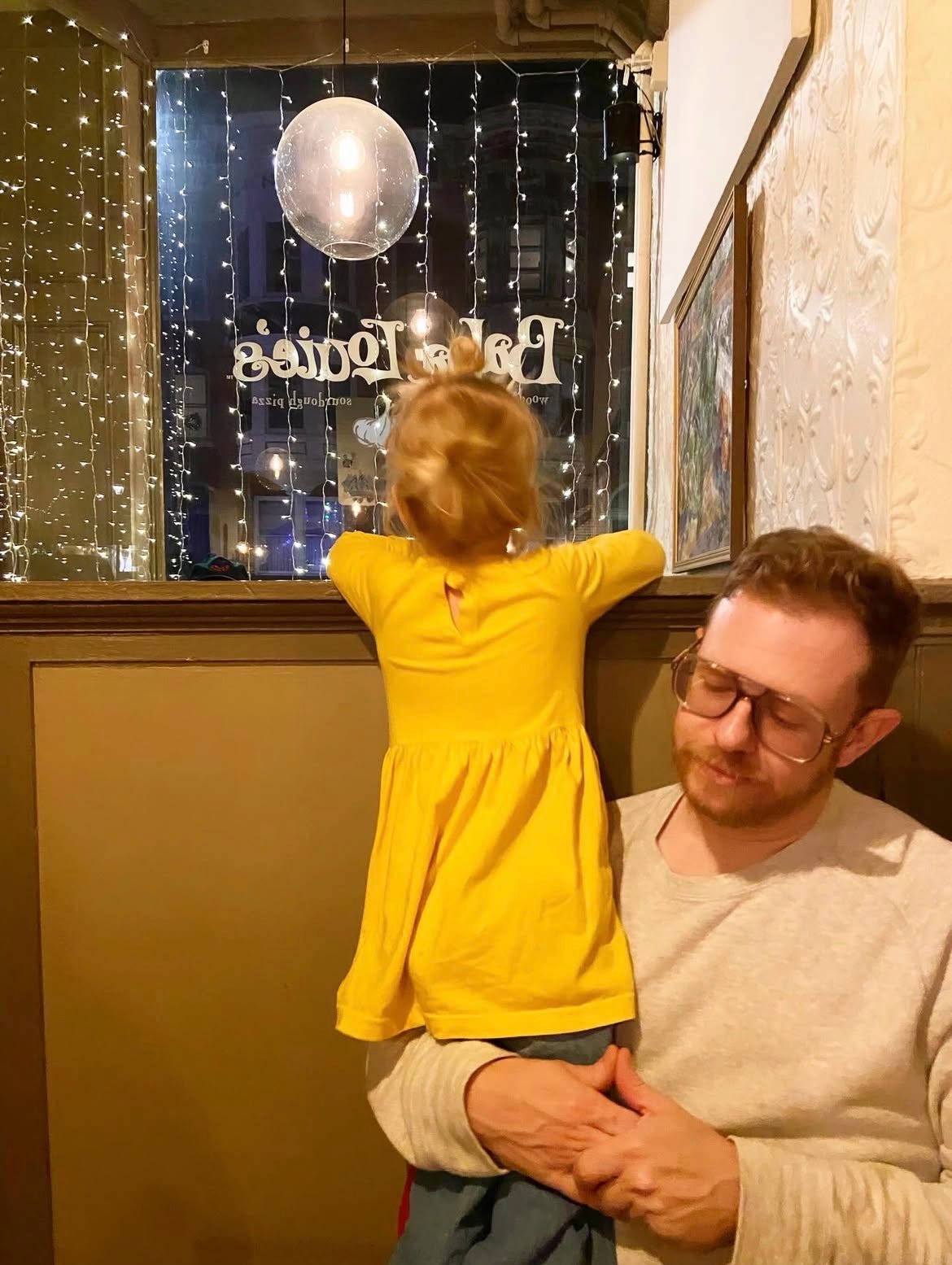
How becoming a parent influenced Lodro’s perspective on basic goodness
Ryan: So now, you have a 2.5-year-old daughter. Do you feel that wanting to focus on this topic coincided with your parenthood journey at all? How has your parenthood journey informed how important this topic is to you?
Lodro: I started writing this book before my daughter was even born. And then it changed pretty radically once she was.
When a kid is born, we see the reality of basic goodness. No kid comes into this world believing that they’re not enough, that something’s broken within them. That is something that they learn. It’s been fascinating and heartbreaking to see my daughter, at this point, start to engage her world fully, and to have moments of unbridled confidence that she is awesome as she is. And then to come up against a situation where a kid steals her toy, where she feels awkward in a group, or whatever, and to watch that sense of doubt start to creep in. I’m like, “Oh no, it happens this young!” You know?
And we could do the best job we can in terms of trying to make sure this kid knows that she is basically good, and there will still be other people at work, her friends, her peers, that might and will probably undermine some of that language. And it’s terrifying, because we all go through this.
How the Buddha himself confronted self-doubt
Ryan: In your book, you talk about the fact that people have been noticing this for thousands of years, about basic goodness as obviously predating the Buddha. The Buddha didn’t invent basic goodness; he articulated it. And then the concept was articulated again and again, in different ways, as a place to come back to. As kind of a North Star within the Buddhist tradition.
You also talk about the fact that doubt has been with us, too, for a really long time. That within the story of the Buddha, doubt is even personified, as the demon Mara. And that one of the final obstacles that he had to come up against, before enlightenment, was really doubt in his own basic goodness and what he had to say, what he had to share.
So Mara is here in these big mythological stories, but also Mara is here in our playgroups, and on the playground and in interactions with teachers that maybe are not being diplomatic, or whatever. Mara is old, and also still here.
I’m curious to have you speak about that kind of duality—which eventually maybe we would transcend as Buddhists. This sort of dance between doubt and basic goodness, and how that has been talked about in Buddhist literature. I know that you are so good at making ancient sutras so relevant to us and explaining them in this very relatable way. So what has already been said about this? And where does your commentary fit into that tradition?
Lodro: That’s very kind of you.
I remember, since we were just talking about my parents, when I was young, I asked how we came to be. It was one of these very big philosophical questions for a 6-year-old. And my mother said, “Well, we were awake, and then we second-guessed ourselves, and then ignorance was born.”
I love that answer, because it is that sense of, fundamentally, we are awake. The story of the Buddha is a story of someone who discovered that wakefulness within himself. It’s not like he transcended everyday concerns and thus went to a higher state of being. He was like, Oh, I’ve been good all along. I am inherently wakeful.
At the time where the Buddha started to really understand that, he’s sitting under this tree, and [sees] Mara, who is either an actual being, or just the way that we talk about the various obstacles that come up when we actually start to address some of the things going on with us. When we start to meditate, for example. So all of a sudden, lots of versions of passion came up, and tried to take the Buddha’s mind away from this topic, and he backhanded that away very gently. And then same thing, with aggression, and different versions of that. And finally, Mara said to the Buddha, or soon-to-be Buddha, ‘Who do you think you are anyway? You think you’re worthy enough that you of all people get to wake up and become fully awake, to become a Buddha?”
It’s in that moment that the Buddha is said to have touched the ground and it literally shuddered under him. There was this sense of real confidence—that I’m inherently worthy, that I’m inherently awake, all beings are inherently awake, and it’s not just me. And Mara is like, “Okay, enough, this guy’s too much,” and fled. And that’s the moment that the Buddha was then able to see his way through the last obstacles and become fully awake.
So I think I’m talking about a very big topic of enlightenment, reconnecting to “Buddha nature.” And in the West, starting in the ‘70s, we started referring to that as basic goodness. That is a term that started with the Tibetan Buddhist teacher Chögyam Trungpa Rinpoche, and then has spread wildly. Even the last two decades, you see Tibetan Buddhist teachers use it, Insight meditation teachers, Zen teachers. It’s sort of entered the common parlance for a reference to that sense of underneath all of this, we are already all complete as is.
So the duality that you’re referring to is that sense of, we could say, Mara and the Buddha. But we could also just say it’s that little voice inside us that says you’re doing this wrong or you shouldn’t have said that on that podcast.
Once we let go of that, just even for a second, we can say, “No, actually, that’s not real. What’s real right now is I’m sitting down with a friend, I’m having a meal, I’m driving my car. I can be with that.” And that can even allow us to come back to that sense of wholeness and completeness.
How a golden Buddha statue became a guiding metaphor
Lodro: I share another story in the book right at the beginning—and forgive me if people already know this one—from Thailand, where in the mid-20th century, these monastics were moving this large clay Buddha statue. And they dropped it. It actually fell, and it cracked open. They started examining the cracks, and they saw that there was some sort of glimmering happening underneath the clay. They chipped gently away at it. And they were like, “There is solid gold underneath this clay.”
It came out that centuries earlier, to protect the statue from invading tribes, it’d been covered over in clay to disguise its value. And then people over time forgot the true nature of what this thing was. And now people travel all from all over the world, to see the statue that happened to be gold all along.
That’s who we are. We’ve forgotten we are gold. We have covered ourselves in layers of focusing on our imperfections, or our flaws, or the thing that we did, where we are never going to let ourselves off the hook for whatever it is. We are taught implicitly, explicitly, that we are not enough as we are. And then we start searching outside ourselves for happiness, contentment, instead of actually saying, “Well, if I actually just let go of some of these stories, I could reveal that true golden nature underneath.” That’s what basic goodness is.
Ryan: I love the image of the golden Buddha covered over with clay—and clay that was originally put on to protect the Buddha. Because that’s what so many of our protective mechanisms are about, right? It’s about protecting something vulnerable in us.
Even our inner critics, in a sort of Internal Family Systems theory way, can be thought of as protectors. They’re trying to protect us from messing up, looking bad, hurting somebody, right?
But over time, it’s like we forget that there was anything underneath the clay. And that the clay was there, perhaps temporarily, to protect something that was vulnerable, and we might not need that anymore.
Lodro: Yes.
On wrestling with our own inner critics as parents
Ryan: You talk in particular about just wrestling with your own inner critic in ways that I found really, really relatable.
I have followed your work since I was in my 20s. And even when I was meditating, I was always still doing things in my 20s that weren’t that cool, and that I regret. And I still think about them. And you write about that too, in ways that I really appreciated.
Now that we’re parents, it also feels like there’s this inner critic voice that’s constantly monitoring the choices that we make as parents, because the stakes are higher. When we make choices, they impact this little being that is very vulnerable.
You and I also both care for aging parents, and the stakes of the decisions that we make also ripple outward to them. So even though we’re maybe older and wiser, and not making the same kinds of 20-something mistakes, there might be fewer in quantity, but the rippling effects of them, the impact of them, the consequences of them, feel bigger.
I’m wondering if you could talk about what your experience of your own inner critic, your own sort of clay has been like, as you’ve transitioned into parenthood, and how you work with it now?
Lodro: Gosh, it’s a really brilliant question. Thank you for that one. I do think that there’s a couple aspects of this.
[Dogs bark again, reminding us that pets too are part of this pile of adult responsibility.]
I think there’s a couple layers to this.
One is that sense of making peace with past versions of ourselves. Apparently every cell in this body dies, and is replaced over a period of 7 years. I think of myself as one continuous thread, but the reality of the situation is that this was two bodies ago, in our 20s. And doesn’t mean that I’m dead and reborn or anything. It’s just a sense of I need to give myself grace, and realize that I am constantly growing and understanding more and more of this world and how to be in this world as I practice and as I age.
Those two things have gone really hand in hand as someone who’s grown up meditating. The meditation, I think, has helped me start to see where my habitual ways of doing things aren’t working, and to sort of undercut some of those tendencies that aren’t, and also to strengthen the ones that are. To be honest, it goes both ways.
There’s some discernment that arises out of meditation: Here’s what I want to cultivate more of. Here’s what I want to cut down or cut out. And now that we are the age that we are, and we are taking care of older parents and also young beings, I do find that the same sort of tendencies come out. Like, when I am stressed or overwhelmed, my fuse is shorter, right? But I know that about myself at this point. So I also know—I’m gonna refer to my kid here—I’m gonna set you up with your Tonie box over here. I’m just going to step outside for a minute, and come back to the breath for a few minutes, particularly now that it’s nice out, and let the sun actually hit me. Then I’ll come back in.And now we’re going to go and try and talk you into going to music class again.
But there’s some sense of, “Oh my gosh, I know my tendencies so much better than I used to. I also know that it’s entirely within my control to make better choices.”
And I think this is an area where so many of us get stuck. For example, people will say, “I’m an anxious person,” or “I’m an angry person,” whatever their thing may be. And that becomes an identity marker that, frankly, they just buy into wholesale, as opposed to, “This is something I’m working on.”
I think just having that view throughout that “Oh no, I’m not an anxious person. I’m a basically good person who gets anxious sometimes,” it makes the whole situation so much more workable. “Oh, when my mind wanders, that means that it’s up to me. I have the choice to continue to spiral about the thing, or acknowledge the thing and come back to what’s happening right now.” There is just, again, a sort of lessening of that harm.
Because, as you noted, the impact is so much greater. The last thing I ever want is for my child to feel afraid because I snapped or something, or that my child would ever feel ignored because I’m too lost in my head to be there with her, or whatever the thing may be. I feel like I’ve been meditating for a couple decades now to train me for the demand of a being who’s like, “Please be 100% present and here with me, in an open and emotionally available way.” It’s like, okay, this is the thing I’ve been training for.
I feel like I’ve been meditating for a couple decades now to train me for the demand of a being who’s like, “Please be 100% present and here with me, in an open and emotionally available way.” — Lodro Rinzler on parenting a toddler
Lodro: I will say, because that makes me sound like I’m really good at this, I’m better at this point with my daughter than I am with my mother who has dementia, and some of the unintentional—it has to be considered unintentional, because of the dementia—abuse that I experience at her hands. She’s in sort of a late stage, and can at times be very mean and very cutting, and threaten to do things that she ultimately would never in her right mind do.
My wife Adreanna Limbach says a lot of wise things. One of them is, “Our family knows how to push our buttons because they’re the ones that installed them there in the first place.” So I am walking this tightrope walk of not necessarily allowing those buttons to get pushed too deeply, or if they are, to reset them as quickly as I can, so that I don’t do anything that would ever negatively impact my mother. And then to also make sure that I’m not installing these sorts of buttons in my child. But there are often times when both of them are demanding my attention at the same time. It’s hard. It’s definitely hard. And if there’s ever a place to talk about it, it’s here on In Tending.
Ryan: Thank you for saying that. And again, it’s very validating to hear that somebody who has been meditating for literally ever finds that to be difficult.
And I share that sense that it is often much easier to touch into the basic goodness of children, in my experience—and this may not be true for everybody—than it is to touch into the basic goodness of our elders, particularly ones who are closest to us. It feels as though there’s just so many more layers of clay.
Lodro: Exactly. Thank you. That’s it. It’s the layers of clay. It’s real.
And I mean, listen, I think we just all have to be very real about these conversations. It doesn’t make us worse practitioners for admitting that at times, that cutting thing from the elder parent hurts. It’s very human. We’re all humans.
A while ago, I have a friend who is in creative directing, and he asked. “Well, what’s the brand for your book, and for you doing the new book?” I was like, “I’m just a human. I’m a very human human. There’s no brand there.”
But if you had to put a label on it, it’s that I will be entirely honest about the humanity of it all. And I can believe that I’m 100% basically good, and also challenged at times, and I don’t have to be perfect.
Ryan: And I do feel like that is something that feels as though it’s a pressure, one that people who are engaged in mindfulness then put on themselves.
If you’ve been meditating for a while and you still get hooked by these incredibly challenging things that come up in caregiving, then I find that sometimes it makes us more prone to self-criticism, because there’s this narrative that I should be better at this. I should be more mindful. I should be more compassionate.
Lodro: Right.
On removing the “second arrow” of judging ourselves for having a hard time
Ryan: I wonder if we could talk a little bit about the second arrow, because I think that’s what we’re talking about.
Lodro: Yeah, absolutely. So it’s a beautiful analogy that I find myself saying to people like a couple of times a week at this point, because so many of us struggle with this.
So, imagine going through this field and out of nowhere an arrow comes and hits you in the arm. Now, the thing objectively we know she should do is we should take the arrow out and tend to our healing. The thing that we often do instead is we say, “Who shot that arrow? I bet it was Charles. Charles has always been out to get me. It’s absolutely that person. This is totally like them. When I get back to the office, I’m going to tell everyone what a jerk Charles is.I’m going to turn everyone against him. And he can’t do this. He can’t get away with it.” And that is the second arrow.
The first arrow is there is suffering that happens as part of life. The Buddha said right out the gate, there’s going to be aging and sickness and death, and all sorts of things that are going to shift under your feet, and real-world events that are suffering. They just are. What do you do in response to that? What we often do is we give in to the second arrow.
So the first arrow is: there’s suffering as part of life. The second arrow is: there’s then suffering that we layer on top, in our own mind, that we don’t necessarily need to engage in.
We don’t need to go to that story. In fact, if we didn’t go to that story, it’d be a lot easier to pluck that arrow out and tend to our healing.
It’s the second arrow that is where a lot of us struggle. Not just, “Oh my God, I can’t believe that I lost that client,” but “Oh my God, I lost that client because I’m not good at my job, and everyone hates me. And no one’s going to want to work with me.” That’s the second arrow, right?
Ryan: Right. Yeah. That’s Mara showing up.
Lodro: Yeah. All of it. Yes.
Ryan: I think that it’s just really important to talk about that. Because I do think that when we talk about basic goodness, it’s not just a neat idea. It really is a pretty radical reframing of the way that we see harm and responsibility.
I think of the two stories as, one, the who’s bad and who’s to blame story. And again, in some religious traditions, that’s the story. And there’s a lot of discussion around who’s bad and who’s to blame, and also who’s good and who is worthy, or worthier, of the good things. And so that’s one story. And I think we’re living in that story, and we can see that from the way that children are disciplined to our carceral system.
And then there’s another story, which is: what are the needs and how can I meet them? Right? Like, so thinking, would it make more sense to pay attention to the fact that I need a doctor right now for this arrow? Or is it more important that I track down the person who shot it, or blame myself for being so eminently shootable?
I think that the shift towards what do we need and how do we meet the needs is really radical.
“So the first arrow is: there’s suffering as part of life. The second arrow is: there’s then suffering that we layer on top, in our own mind, that we don’t necessarily need to engage in.” — Lodro Rinzler
Ryan: Just to share a personal story from our family; my husband was raised Catholic, and he’s got this christening outfit—like, the whole nine yards—that has been passed down in his family forever. And his family asked us, would we like these garments? As in: are we choosing to go through that ceremony?
Being a Buddhist married to a fairly casual Catholic person, sometimes it makes sense to be like, “You know what, sure. let’s do it for the ‘gram, let’s give them some pictures.” But with this one, I’m like, “I really can’t back it.” Because the whole idea of baptism is that you’re born bad, and then you need to do these things in order to make the bad go away. And as a Buddhist, it really came back to basic goodness for me.
So I’m like, “With all due respect to your family traditions, that’s not what I believe. And that’s not the story that we’re going to tell in our home, and that’s not the reality that we’re going to raise our child in.”
And that’s a choice that we made fairly early on as parents. And I come back to that all the time.
In so many ways, the spiritual traditions of the world all point to this idea that we should be kind to ourselves and other people. And yet, without basic goodness being a bedrock part of the spiritual community, I think we can really kind of start to drift.
And that’s why I think this book is so important, because I don’t think that somebody in this era has really articulated what basic goodness is and what basic goodness isn’t. And also articulated, potentially, the objections that somebody raised in the who’s bad and who’s to blame story, through no choice of their own, would bring. “But what about this? What about this?”
Frequently asked questions—and objections—about basic goodness
Ryan: I’m curious to know what kinds of common questions you get when you say, actually, everybody’s basically good inside.
For example, I know you get a lot of questions about political leaders. I’m wondering if there are other objections that people have where they’re like, “Well, but in my special case, I am actually worthy of second arrowing. I really am terrible.”
Lodro: I haven’t found a lot of people who admit that. I think that people can be skeptical, and the way that they are skeptical about their own basic goodness is that they then say, well, what about this person?
Ryan: That’s so interesting.
Lodro: They’re trying to poke a hole somewhere, because they may not necessarily buy into the fact that they’re basically good. Sometimes it’s independent of those things, but sometimes people say, I can’t believe that my ex would be basically good. It becomes more personal, right? Right. Like, you haven’t met my ex. Like this person is really manipulative or whatever it is.
With that situation. I’m reminded of a story. It’s a horrible story, but I’ll share it.
I was on a book tour some years ago, and there’s the questions you noted I get quite frequently. At the time, it was, “What about Hitler? Hitler can’t be basically good.” Which we can get into if you want. We had some conversation about it, and I sort of said the perspective that I normally share.
On the way home, the person who was hosting me on that book tour said, “I’m so glad you said that. I don’t know if it’s relevant, but—” And she shared that she had married someone who had kids, and she also had kids, and it became a blended family. And one of her step-kids fell in with a very bad crowd in his late teenage years, and they were doing drugs, and they murdered someone. I’m basically just going towards a euphemistic version of the story because I don’t know the gory details of this, but it was gory, and sort of an unforgivable crime.
And he went to jail, and she went to visit him in jail, and found a completely closed-off human being who was not at all recognizable to her. And she had heard that thing about basic goodness. And she was like, “I don’t know, maybe not. Maybe we can just forget it. Maybe it’s something that comes and goes. Maybe it’s not always there.…but this is also my kid, and I’m going to keep coming back as much as I can.”
So she would regularly visit, and he would receive her, and It would continue on like that for some months. And then at one point, he asked about the family dog, and that was the entry point. They talked about the dog a lot. And then a couple of visits later, he asked if she could bring art supplies. He hadn’t done anything artistic in years. And she brought them, and he began painting.
And gradually—and it was still in process at the time that I was visiting— she said, “I’ve seen him come back to himself. To who this kid was, and that basic goodness that I saw before. I’m seeing it again.”
So I think of that. Because there are extreme cases, where people can get extremely confused about their basic nature. And going back to, “What about Hitler” or “What about that world-threatening politician?” It’s same sort of story. Like, this is not someone who’s doing well, folks. This is not someone who’s in touch with basic goodness and deciding to harm a lot of people. Those sorts of decisions come when we are feeling at our worst, quite frankly. When we’re so ignorant to the way that our actions are affecting others that we cause harm.
I’ve been there. You’ve been there. Like, maybe we aren’t at that scale of that world-threatening politician, but it is still similar. We can say that we feel not-good, and we are trying to make ourselves happy in ways that are not actually making anyone happy. That is something I know, something I see in others, and something I definitely see in the people that we would normally try and villainize.
So the story of this teenage kid who’s now in his 20s, it is a situation where it’s like, “It’s nice to remember that people can come back to themselves.” I’m not even going to say redeemed. I’m not going to say that this person should be forgiven. I’m just saying that they can come back to that sense of, “Oh, underneath some of these things I’ve gotten swept up in, I don’t only have to act from pain.”
Ryan: I can actually come back to something else. Yeah, absolutely.
How to explain basic goodness to our children
Ryan: And honestly, word for word, that is the description of why sometimes people do bad things that I’ve given to my 6-year-old son.
Like, if we’re talking about ICE, or if we’re seeing something in Star Wars that just doesn’t seem right. Even within Disney movies, you will see people dressed up as police who are supposed to be helpers, doing reprehensible things. And so the question is always, “Why would they do that, Mama?”
And so to me, I think it’s a much more legible, developmentally appropriate way to explain the world to a kid, to say, “Well, you know how sometimes you want more than you really need? You know how sometimes you feel really mad and you want to hit? You know how sometimes, like, you just don’t feel like being part of the solution process and you’d rather just go play Minecraft? Well, other people have those things going on inside of them too. And sometimes, they don’t have very nice mommies and daddies who are helping them learn to work with their minds, and so they just get bigger and bigger until they touch huge parts of the world.”
And I don’t know what your experience has been in talking to people about it, but even my 6-year-old seems to be able to really grasp that. Because it isn’t like, wow, this is an unimaginable evil that’s out there, right? It’s like Thich Nhat Hanh said: the real enemies of man are inside of us. They’re greed, aggression, delusion, cupidity.
And then it’s not about who’s bad and who’s to blame. It’s what’s needed? I think sometimes it’s about meeting the needs of the person that’s suffering and acting out. You brought up your aging parent—where it’s like, do we need to really get granular about why this person who is experiencing cognitive and physical decline is acting like a person who’s in cognitive and physical decline? I think we know why that is.
Lodro: Exactly.
Ryan: So it’s more about, what do we need to do? What’s needed? And I think that by shifting into that story, even if you aren’t fully in touch with that person’s basic goodness, you’re still acting out of your own, which is something.
And that’s something that we tell our son too: that we act in kind ways, not because the other person has shown us they deserve it, but because that’s the people that we’ve decided to be.
And truly, sometimes I can’t really touch into a sense that somebody deserves my kindness, but it’s who I’ve decided to be. And that feels more accessible to me. It’s a habit I’ve developed, right? If we’re Buddhists talking about habits, it’s like, well, my habit is, this is how I’m going to relate to somebody who seems like they’re really suffering.
Not always, to be clear, not always—as my husband will tell you. But if we shift into being inside of a different story, then different choices become possible for us.
Lodro: Yeah, 100%. And I think what you just said nailed that answer. We have to make it human, as opposed to something vague out there—that person, that politician, that we’ll never meet. It’s more like, “Have you ever acted out of impulse, hurt, whatever, and caused yourself harm? Yes. Have you ever done that and unintentionally harm someone else? Yes. Cool. So not same same, because the scope is different, but there is some similar come-from.” And then people start to say, “Oh, now there’s an inroad toward, if not compassion, at least understanding.”
Ryan: Yeah, right, exactly. It’s context. It’s not an excuse.
But I think the less we can be overwhelmed and confused and alienated from the actions of the people that are engaging in harm, the more we have a working theory for how these things arise, I think the more effective we can be in the world and taking action around it.
Lodro: I think that’s really the scope of it.
“Everyone is baby”
Lodro: So this book goes from, okay, I’m basically good, I can reconnect to my basic goodness, and then—well, there’s also all these other people in the world, and they’re basically good too. So there’s the people I like, and there’s the people I don’t like—which is hopefully a very small number of people.
And then this massive group of people called everyone else. The people that are riding their bikes by right now, or who I run into the grocery store, or whatever. And for them, they have the main character energy for their life. But for me, they’re a background player, right? But I treat them as all equally worthy of respect.
I think I shared at one point this piece that I wrote for the Substack that we do called The Laundry. And it was the best advice that my teacher, Kilung Rinpoche, gave me. I said, “I’m worried that when this child comes, I’m not going to be able to do long retreats and meditate as many hours a day as I currently am.” And he was like, “Uh, yeah. You’re not.” But here’s the thing, he said, and he was right: “Be attentive to baby. Just be present to baby.”
In those early months, I’d get in little bits of practice here and there, and it was like, “Okay, but now there’s this being right here, and this is the practice right now. I’m just 100% here with this being who at that point, at all communicative or communicates in different ways I’m trying to understand and make sense of—but there’s some sense of, okay, that’s the practice.”
And the more I started leaning into that practice, and the more we would be out in the world together, I’d be giving 100% attention to this being, and then there’s someone smiling at us in the other lane of the grocery store. And then all of a sudden, I find myself giving my full attention to that baby. Right? Like there’s some sort of shift that started happening of like, “Oh my gosh, all these quote-unquote strangers are also baby. Can I also recognize the goodness, and be as present as possible, with all of these beings?”
And then ultimately, society is made up of me, plus the people I like, the people I dislike, and the people I don’t know. That’s society. It’s not something massive out there. It is so human, and it’s us.
It’s us here in a mini-society on a podcast, talking about this for the Substack. It’s us, and people listening or people reading this later. They are part of this community too. They are actively caring about these issues, and they’re engaged with us. And then ideally, that then ripples into their family, or that then ripples into their care, or that then ripples into whatever work they do. And that society also is affected. So their family society, their work society, their caretaking society, whatever it is. And we all have those.
And that’s what society is. It’s a thousand bazillion little mini-societies that we’re all actively co-creating.
“We are always having an impact”
Lodro: And so there is some sense, going back a thousand questions, of trying to show up as best we can, knowing that we are always having an impact. This is the Buddhist truth of interdependence. If I came on distracted and annoyed about something from earlier, that would have a ripple effect in our conversation, and that would have a ripple effect on people listening, and so on. If I come in like, “I’m going to be fully authentic with Ryan, I’m just going to show up as open-heartedly as possible”— hopefully that then has the ripple effect in a positive way.
Ryan: Yes. And I think that feels so small and it feels so big.
Like, we were talking about how the decisions that we make in this position in our lives sometimes feel so small. I can’t tell you how many parents I talk to who are like, “I’m not out in the streets protesting and I feel like a failure as an activist,” you know? We can feel so helpless and inadequate when we are just buried in care tasks, because we’re not engaging civically the way we were in our 20s, right? Or our 30s.
And yet at the same time, there is a school of thought, and you can kind of balance the two perspectives, that every action I take as a parent right now is going to have enormous ripple effects that I cannot predict. Every decision I make, like you said, to step out and sit on the porch for 5 minutes, which I definitely did before this, for the reasons you name, can have these ripple effects.
And there’s also just that huge middle ground, between me and the political leader I deeply distrust. There’s this whole map of people that I can have a positive impact on.
And it’s almost like working a mathematical proof, where it’s like, “Well, if I’m basically good and I’m down with that, and that political leader is basically good, and I can at least experiment with that being true, then every single person in between is basically good, which means that … society is basically good?” Which is the bold claim that you make.
For me, it’s like—wow, that’s a much more manageable way to think about it, particularly as a woman, where it really does feel like society is this thing that is just pushing down on me, and all I can do is push a little back, and try not to crack. It’s like, “Oh yeah, I am part of all these societies.”
And it makes me think of adrienne maree brown talking about murmurations, and how actually as an activist, we can look to join a murmuration. Right? These sort of bubbling-up experiences of people, all at once, awakening to basic goodness—all at the same time, potentially in the same place, around the same issue. And suddenly you have Selma. You have the protests around George Floyd. You have these huge bubbling-ups that you can take part in.
And not every protest is going to be a murmuration, But I also think that it might just be knowing what murmuration you’re a part of that helps you feel as though your daily experiences of basic goodness are actually connected to something bigger—and that something bigger is going to maybe have an impact on something that feels really existentially huge, like climate change.
Ryan: So, You have 2 minutes left. Please tell me your thoughts on how basic goodness connects to questions like, how do we deal with climate change? No pressure!
Lodro: Yeah, no pressure.
I’ve made reference to throwing a stone in a pool of water, and that we don’t always see where the ripples will go. And the beautiful thing about the truth of interdependence is that we could march in the streets, we could write something politically active or positive on social media, it all has a ripple.
I think because we are in a Western society that wants to maximize productivity, we want the biggest ripple that we possibly can with the least amount of time. And I think it’s a very hard thing to do. Because, as you noted, many of us feel like, I only have so much time. I’m raising a child, I’m caring for an elder. Or there’s any number of things that take up all the other non-working hours of the day.
This push-pull is insane, don’t get me wrong. I have no idea how I have time for anything. But it starts to become, for me at least, less about what do I need to do and more how do I show up? Who do I want to be?
I once heard this described as the difference between resume and eulogy qualities. Resume qualities: here’s the things I got done, I sold this many books, or I made this many sales in Q2, or whatever your thing may be. A eulogy quality is: what do you want people to remember about you after you died? What do you want them to say? That you are a loving person, that you are kind, that you showed up and tried to make a difference.
That doesn’t get limited to going to that one march. It’s an everyday occurrence. Whoever you encounter, whether it’s someone who is on the other side of the political aisle in the grocery store, or calling your senator, it is how we show up that is going to have a ripple effect.
That’s the beautiful thing of the truth of interdependence. Just because we don’t see it all, just because there isn’t an immediate gratification, doesn’t mean that we’re constantly having having a positive impact, when we embody the qualities that we actually want to see in the world.
Ryan: Thank you for that. I think that’s a beautiful note to end on. And not only because I know you have to go—speaking of having very limited time.
Lodro: I mean, I could do this forever, but I meet with meditation students throughout the day, and I don’t want to keep them waiting either. If I’m talking about trying to be kind and generous, I should show up too for them.
Ryan: “Lodro was very punctual throughout his life.”
Lodro: That’s all I want.
Ryan: Okay, we’ll make a note.
Lodro: Though it’s probably more like, “Lodro was always one minute late.”
Ryan: Yeah, same.
Well, this was wonderful, and please do come back. And, thank you for taking the time. I can’t wait for your book to come out. Will you just tell us when it’ll be out, where it’ll be out, where we can find it? Where we can find you online?
Lodro: Yes. So You Are Good, You Are Enough— what’s the full subtitle here? Free Yourself from the Trap of Doubt and Return to Basic Goodness. It is so long, that title. I’m okay with it though.
You Are Good, You Are Enough comes out March 24th and is found wherever you get books. So you could go to bookshop.org, you could go to Barnes Noble, you could go to Amazon if you want to do that sort of It’s up to you. But if you do decide to pick it up, please feel free to reach out.
There’s lodrorinzler.com, which is probably the best place to find me. And you’ll also find free guided meditations on that page, for the book that are included there. There’s meditations in the book, and then I guide you in them if you prefer to listen to me give it.
And I’m also on Instagram as @lodrorinzler and also Facebook as LodroRinzlerSpeaks, and to some extent X and Bluesky, although perhaps less so.
If you do pick up the book, please feel free to reach out to me. I love hearing from people who engage in this work. I want to have that dialogue. It means so much to me that people still reach out from books that came out a million years ago. And it is that sense of throwing a book into the world, and this big stone falls into the pool of water, and I don’t know where the ripples will go. So if you are inspired by it, and you want to reach out to me, I would love to hear and see that ripple.
Ryan: Thank you so much. And you’re also my neighbor on Substack at The Laundry with your beautiful and amazing wife Adreanna Limbach, who I really love and appreciate.
So yeah, lots of places to find you and tell you about the ripple effects that you’re having. I hope you get to hear that as a result of this book. And we’ll let you go now, with all apologies to your meditation students. You can just blame it on me. I’m bad, and I’m to blame!
Lodro: Perfect. Thank you so much.
 | A guest post by
|