
From parental shame to summer savoring
On savoring the sweet moments, without spiritually bypassing the hard ones

Everything you see has its roots
in the unseen world.
The forms may change,
yet the essence remains the same.
Every wondrous sight will vanish,
every sweet word will fade.
But do not be disheartened,
The Source they come from is eternal—
growing, branching out,
giving new life and new joy.
— Rumi
Despite the beautiful weather that surrounds us now, the last few months have been difficult ones for our family. We’ve had multiple meds changes, medical procedures, and three family members in the hospital, across three different time zones. The comfortable drum beats I’ve put in place in the past to help anchor my body and mind—a daily sitting meditation practice, a regular weekly-ish post here on Substack—have given way to an extended free jazz solo. My routine changes every day. I can’t seem to write as much or as clearly as I’d like. It’s been a while since I had the time and energy for a proper sitting meditation session.
It helps me to know I’m not alone. Other caregivers in my life are in this season alongside me. After all, things like dementia diagnoses, divorce settlement drama, chronic illness flares and neurodivergent kid meltdowns don’t go on summer vacation.
(If you’re experiencing difficulties like this, I hope you’ll come sit next to us at our next caregiver support circle; more info below.)
It also helps me to remember, as a former history teacher, that the idea of a “carefree summer” is more of a modern marketing construction than a reality for the human race. Summer has historically been hard on humans, and it remains so to this day.
Consider:
Flash floods, landslides and forest fires historically wreak the most havoc in warm weather. These threats are increasing with climate change.
From the Neolithic age until the 1800s, infectious diseases that thrive in warm conditions killed off large swaths of the population each summer around the globe. Malaria in particular still claims the lives of many children and adults living in Africa and the Amazon basin each summer.1
Poor air quality impacts more people when it’s warm out, particularly people living in poverty. According to studies conducted in both the U.S. and Asia, prenatal and postnatal heat exposure is associated with greater risk of childhood asthma, a condition further exacerbated by living in low-income neighborhoods with few trees.2
Millions of children around the world, in places like Gaza and Sudan, are living in close proximity to armed conflict3. This means they’re not just out of school for summer break — they’re experiencing long-term gaps in their education, not to mention long-term food insecurity, that will shape their lives for years to come.
I don’t share these facts so that we can turn around and shame ourselves for having seemingly smaller problems. I wish for all the world’s children to be safe, to be cared for in body and mind, to feel moments of happiness, to know peace amid the ups and downs of life. I feel sad when any child, including my own, does not have this.
My point is that individual parents cannot “give” anyone a smooth and easy summer. We are parenting amid natural and man-made forces much bigger than we are. By acknowledging our interdependence with all kinds of causes and conditions we do not control, I hope we can come to feel less shame, not more.
From summer shame to summer savoring
People in past eras have always found ways to notice and appreciate everyday summer sweetness, even amid the struggles of the season. It helps me to remember that this is true for us, too. Ancient Mesopotamians replenished their energy with fresh dates swirled together with ghee. Asian poets composed centuries of odes to the ephemeral beauty of flowers. Indigenous people in the Americas have held celebrations to mark the arrival of the wild strawberry for hundreds, if not thousands of years. They did not do this to spiritually bypass the difficulties of life, but to survive them.
When someone asks me, as a meditation teacher, whether I have any suggestions for “busy parents who only have five minutes,” I often reach for short rituals that support, in some small way, this timeless practice of savoring.
I’ve included some of my favorites below, practices that have been helping me through my own hard summer. I’ve also included scientific citations for each short practice, so that if you truly only have five minutes, you can work these rituals into your routine in ways that will actually bring real mindfulness-related benefits, and not just vague good vibes. (You can also find my suggestions here, in screenshot-friendly form.)
May what follows here help to remind you that you already have what you need, right here, to survive this hard season, and the ones to come. May it feel to you less like you’re trying something new, but coming home again. May these rituals help you take your place in a long lineage of resilient humans who have learned to make lemonade for their loved ones, over and over again, out of whatever bittersweet summer fruits this world has to offer.
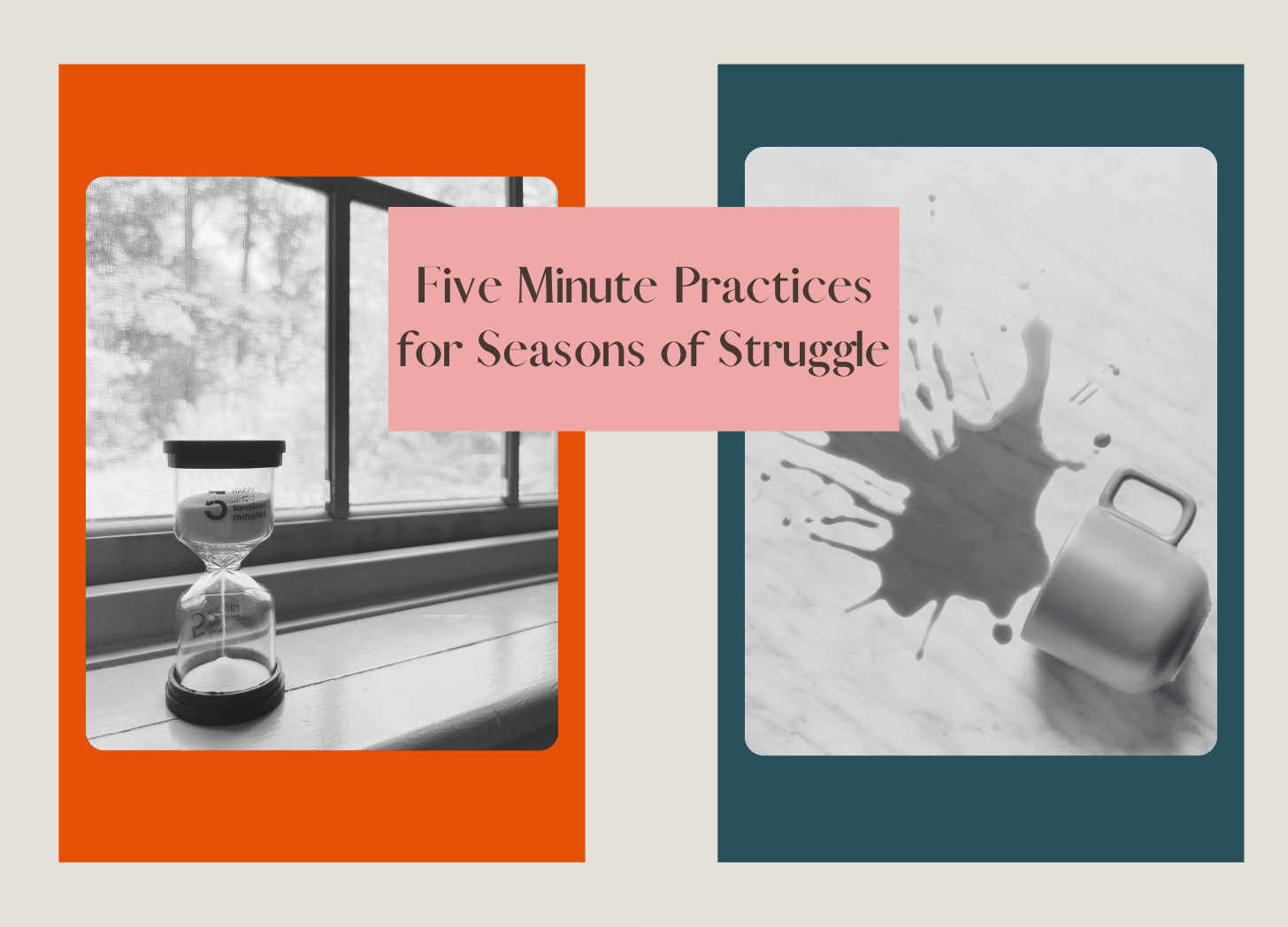
Notice color
If I only have five minutes to practice mindfulness today, I often focus on gently engaging my senses.
I start by counting colors. How many blue objects around me? How many green? Often I invite my child to do this with me. Playrooms offer plenty of opportunities for noticing bright colors (one might even say too many?). But doing this on a drive together works too.
The science behind this: Attuning to what’s outside of your body versus what’s happening inside of your mind brings the prefrontal cortex—the driver in the car of your mind—back online, stopping you from feeling like you’re spiraling out of control. Done regularly, it can also reduce negative self-talk, and create the conditions for experiencing self-compassion and empathy, even in the most anxious folks.4

Attune to sound
If I’ve only got five minutes and I’m in a place where I can hear ambient noise—birds, planes, sirens, fans, doesn’t matter—I’ll attune to sound.
All sounds invite us to notice that sound is only ever happening in the present moment. Sounds arise, peak, and fall away—just like every other easeful or difficult experience in life.
The science behind this: Just like attuning to the sights around you, this practice redirects your awareness from what’s going on inside of you to what is going on outside of you, interrupting rumination. It doesn’t rely on your ability to attune to the breath, which can be helpful for many. The sounds don’t have to be special or even soothing to deliver these benefits.
That said, some research shows that choosing one’s own playlist of “soothing” sounds— “soothing” being a subjective thing for each one of us, shaped by culture and our past experiences—may lead to reductions in anxiety and stress.5
Classical music is a common choice for this. My son and I have been enjoying this kid-friendly orchestral album in particular together as we drive to his summer camp. I can confirm that it helps us both start the day with a more settled mind.
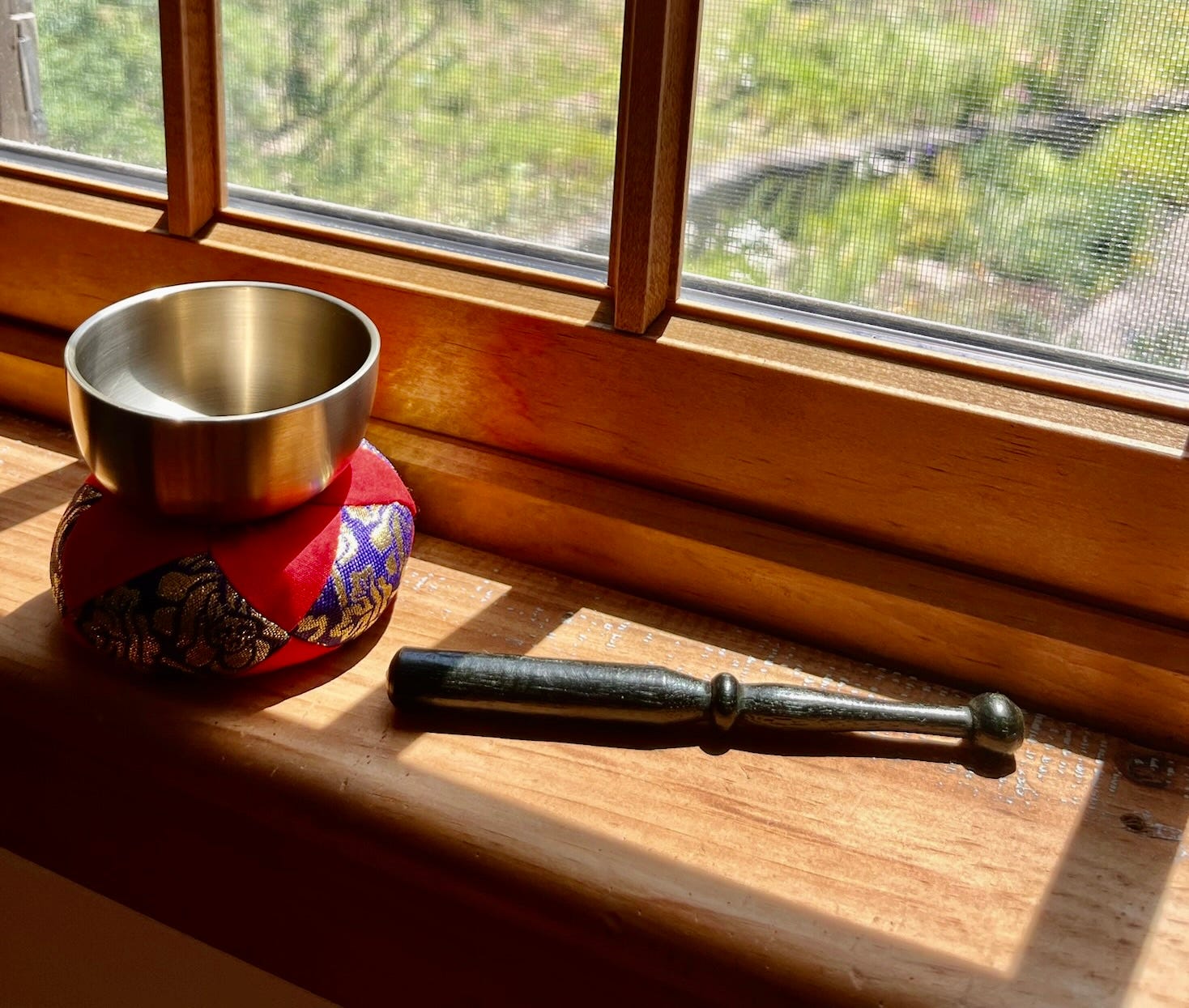
Touch grass (or sand, or wood)
If you’ve only got five minutes, connecting through touch to the earth can be grounding, whether you’re seated, lying down, or walking slowly.
Mindful walking in particular can feel much more accessible to me than sitting, particularly if I’m supervising a child at the same time. Bonus points if your feet can make direct contact with the ground, without shoes on.
The science behind this: Our feet are incredibly sensitive, with many nerve endings. Studies have shown that barefoot walking in particular (as compared with walking in sneakers) can increase brain blood flow, improve overall cognitive ability, and reduce mental fatigue and brain stress.6
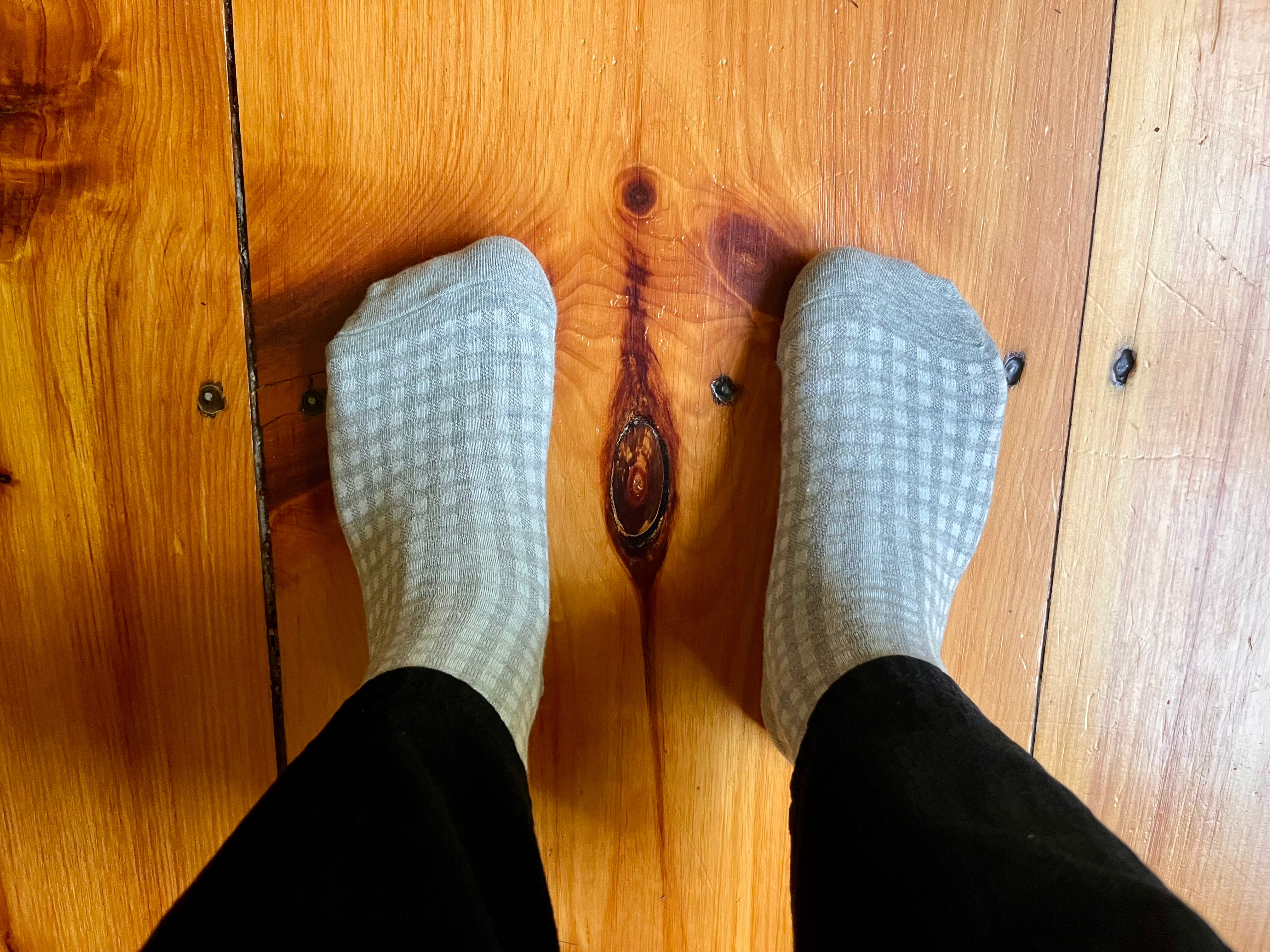
Stop and smell the flowers (or the candles)
This is going to sound cliche, but stopping to smell something good that’s growing, or lighting a scented candle on a rainy day, can be a real balm.
If you’re lucky enough to have a sunny window or a small yard in which you can grow fresh herbs, you can pluck some of the leaves, and crush them together in your hands, breathing deeply.
If this isn’t possible in your situation, you can purchase a scented candle, and choose a quieter time of day to light it and breathe deeply. Or you can purchase essential oil and add it to nearby diffuser, to a warm bath, or under a pillow.
The science behind this: The benefits of lavender-based aromatherapy have been particularly well-studied here. Lavender interacts with the neurotransmitter GABA to help quiet the mind and the nervous system quickly, leading to statistically significant benefits for people suffering from conditions as varied as anxiety, insomnia, cancer, dementia, and menopause.7
Smell is also one of the best-developed senses in children,8 making this an excellent practice to do with your little ones. (My seven-year-old son loves making “potions” with me.) It’s amazing to consider that in five minutes or less, you can create a ritual that powerfully wires the scent of flowers together with the feeling of safety, calm and presence for them, in ways their little minds will remember for a long time to come.
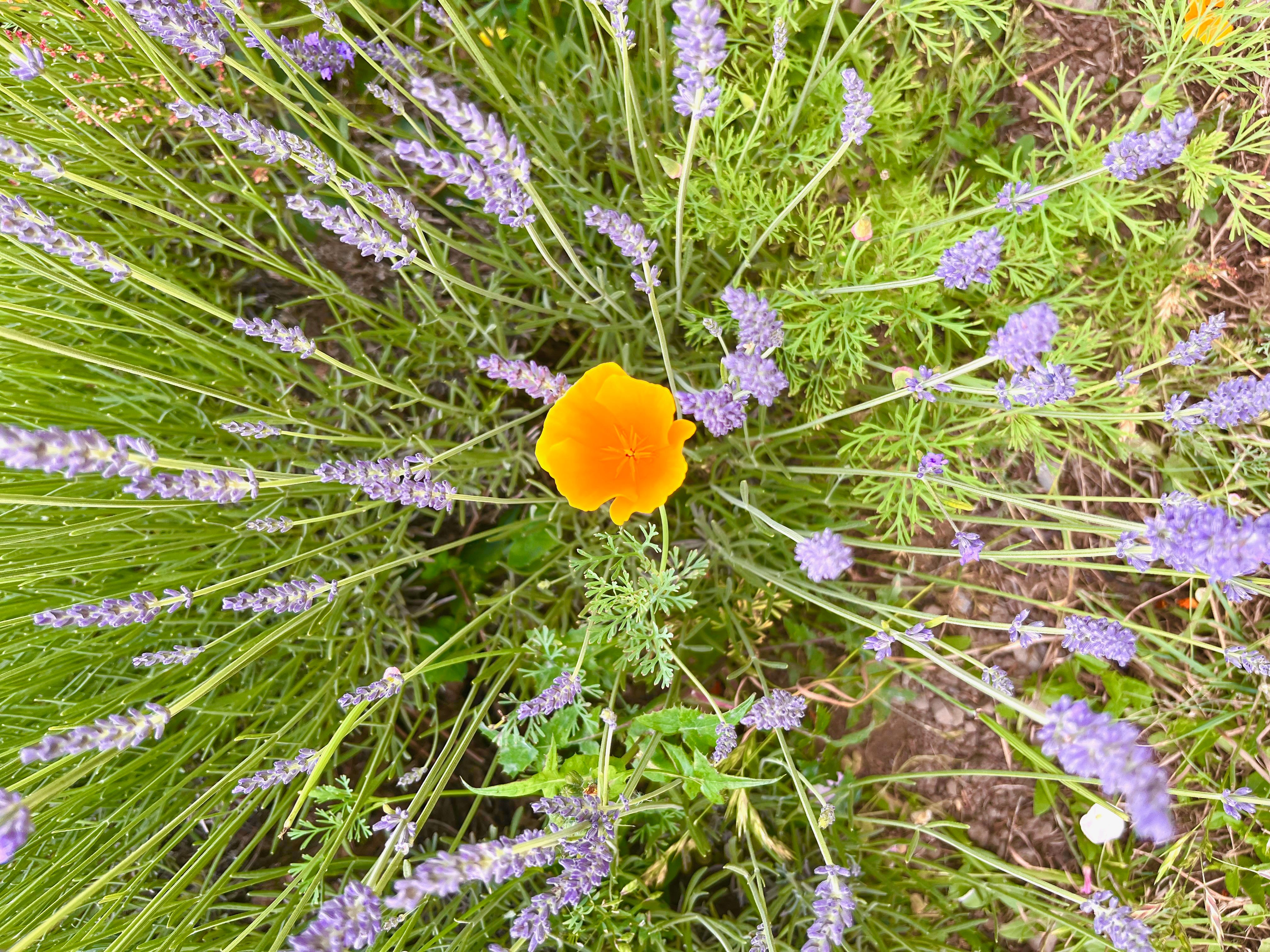
Sip or snack on something delicious
Many folks in my community say that savoring their coffee, without distractions, is a powerful way to engage their sense of taste. They sip slow. They appreciate heat or coolness. They notice nuances of bitter and sweet, swirled together. In this way, a mundane moment becomes a moment of mindfulness, without taking extra effort or time.
Kids, too, enjoy this practice. I have fond memories of savoring every raisin and chocolate chip in a handful of trail mix alongside my mentor and friend, Meghan Fitzgerald, when we were first testing out her Tinkergarten curriculum with toddlers in Central Park. (It was often their favorite part of the class!)
I’ve also heard from other parents here on Substack that taking a “popsicle walk” can turn a hard, hot afternoon right around. Which makes sense: it creates an opportunity to walk together (maybe even barefoot), get some fresh air, and savor the fleeting flavors of summer.
The science behind this: Stress interrupts healthy digestion, which then has numerous negative knock-on effects for the stressed-out person.9 Mindful eating, along with the other practices above, can help the body move from “fight or flight” mode to “rest and digest” mode.

Sidenote: Isn’t this mug above just the best? Sarah Kokernot had two of these made just for us after our interview here, and we had such fun recently connecting with other “dharma weirdos” online here.
A few disclaimers
These “tips” are simple by design. You already knew how to do most of these, didn’t you? If so, I hope this realization helps you build a sense of trust in your own intuition and common sense—reminding you that even when things feel out of control, you may already have what you need, right here, where you are.
Short and long practices are both skillful means for meeting the moment we’re in. Engaging in formal sitting meditation, for upwards of ten minutes a day, has many benefits.10 But quick, simple, sensory practices like these can be more helpful when we’re actively spiraling. My own partner knows that when I’m really in the throes of a panic attack or a PTSD flashback, telling me to notice the things I can see, hear and touch is far more powerful than trying to talk me out of being triggered. (And yes, even as a longtime meditator and mindfulness teacher, I still have these experiences—which is why I’m so passionate about offering these skills to others here.)
It’s OK if you truly only have five minutes today. I know from experience that on certain days, five stolen moments in the bathroom—or in the car, the playroom or the hospital waiting room—is all we have. We can accept that this is the season we are in, while also knowing that like all seasons, this one will pass.
That said, it’s not OK if you “only have five minutes” to yourself for weeks, months or years at a time. Your physical, mental, emotional and spiritual needs matter too, just as much as the needs of the people around you. Your health will deteriorate just like anyone else’s if it’s not tended. If you’re in a situation where your own needs are being met by invalidation, indifference, or flat-out abuse, such that you chronically cannot get five minutes alone, you don’t need one more “parenting hack.” You need the real humans around you to extend a hand.
We’re here for you. Here at In Tending, we’ve got all kinds of guides here on topics like divesting from doing other people’s work for them, clearing space for your own creativity, working with burnout, and surviving difficult family dynamics. We’ve also offered live workshops on mindful, non-violent communication to help folks speak their needs while staying within their integrity. And we continue to meet monthly, live on Zoom, to check on each other and practice these survival skills together.
Join us at our August circle
We’ll be circling up on Zoom on Aug 12 from 12pm-1pm EST. Support for our parent/caregiver support circles comes from paid subscriptions here on Substack as well as one-off donations from attendees, but you’re under no obligation to contribute, especially if it’s your first time. We’d love to see you there.
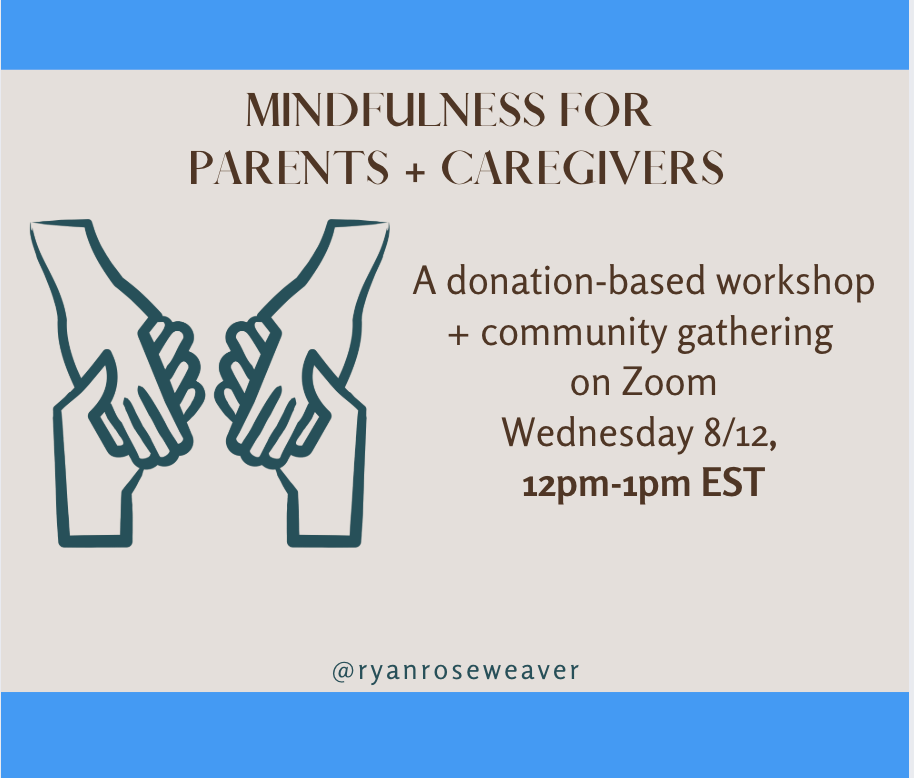
Your turn: What has been bitter about this summer for you, and what has been sweet? What small (like, under five minute) rituals help you stay centered, even when you’re short on time or energy? If you’re planning to join us at our next In Tending community gathering on 8/12, what do you hope to learn or share?
Source: https://www.ncbi.nlm.nih.gov/books/NBK215638/
Source: https://pmc.ncbi.nlm.nih.gov/articles/PMC10160003/
Source: https://press.un.org/en/2026/sc16308.doc.htm
Source: https://pmc.ncbi.nlm.nih.gov/articles/PMC3303604/
Source: https://pmc.ncbi.nlm.nih.gov/articles/PMC11976171/
Source: https://pmc.ncbi.nlm.nih.gov/articles/PMC11211751/
Sources: https://www.mdpi.com/2223-7747/14/3/400; https://www.uclahealth.org/news/article/essential-oils-have-gone-mainstream-offering-real-therapeutic-value
Sources: https://news.harvard.edu/gazette/story/2020/02/how-scent-emotion-and-memory-are-intertwined-and-exploited/
Source: https://pubmed.ncbi.nlm.nih.gov/32549835/
Source: https://manhattancbt.com/how-long-should-you-meditate/
"prefrontal cortex—the driver in the car of your mind"
What a fun way to describe it. I generally use "orchestra conductor" but imagining a car without a driver might really hit home with some people. ❤️
These are so lovely! I'm sorry to hear it's a tough season, Ryan. Sending love.