
Work with me for 1:1 personalized support
I've helped hundreds to name the intentions calling them forward, and to untangle the tensions holding them back. Now, it's your turn.

“There comes a point where we need to stop just pulling people out of the river. We need to go upstream and find out why they’re falling in.”
— Desmond Tutu
I am a mindfulness and meditation teacher with over a decade of experience as a helping professional, caregiver and parent.
Across the spaces I’ve cultivated, my focus is on helping other “tenders” to balance self-tending and tending others, using both traditional mindfulness tools and best practices from disciplines such as child development, educational research and more.
This newsletter, In Tending, aims to offer free and donation-based support for people who:
Are moving through an intensive season of care in their lives, such as starting a family, learning to care for a family member with special needs, tending an adult who is disabled or ill, or moving through a season of grief
Are curious about how mindfulness can support them through this care season, but haven’t found the right technique or community in which to explore this
Are struggling to access traditional forms of community due to their geographical location, health circumstances or schedule
I also offer 1:1 support sessions on a sliding scale basis, to individuals who would benefit from a trauma-informed approach that is more tailored to their specific needs and goals.
In my 1:1 sessions, I invite you to share more about your caregiving context, while I practice deep listening. Afterwards, I reflect back to you what I’m hearing about:
The authentic intentions and ideas that only you can pursue
The tensions and tradeoffs in your current context that only you can resolve
The ways in which a caring thought partner can support you
While I am also engaging in this deep listening during the many groups I facilitate here at In Tending, the 1:1 experience is tailored to:
Your specific needs and caregiving context at this time
Your schedule (as we know there’s no one perfect time for every caregiver to step away from their duties!)
Creating a trauma-informed and confidential container to process material that may not be possible to unpack in a workable way within a group
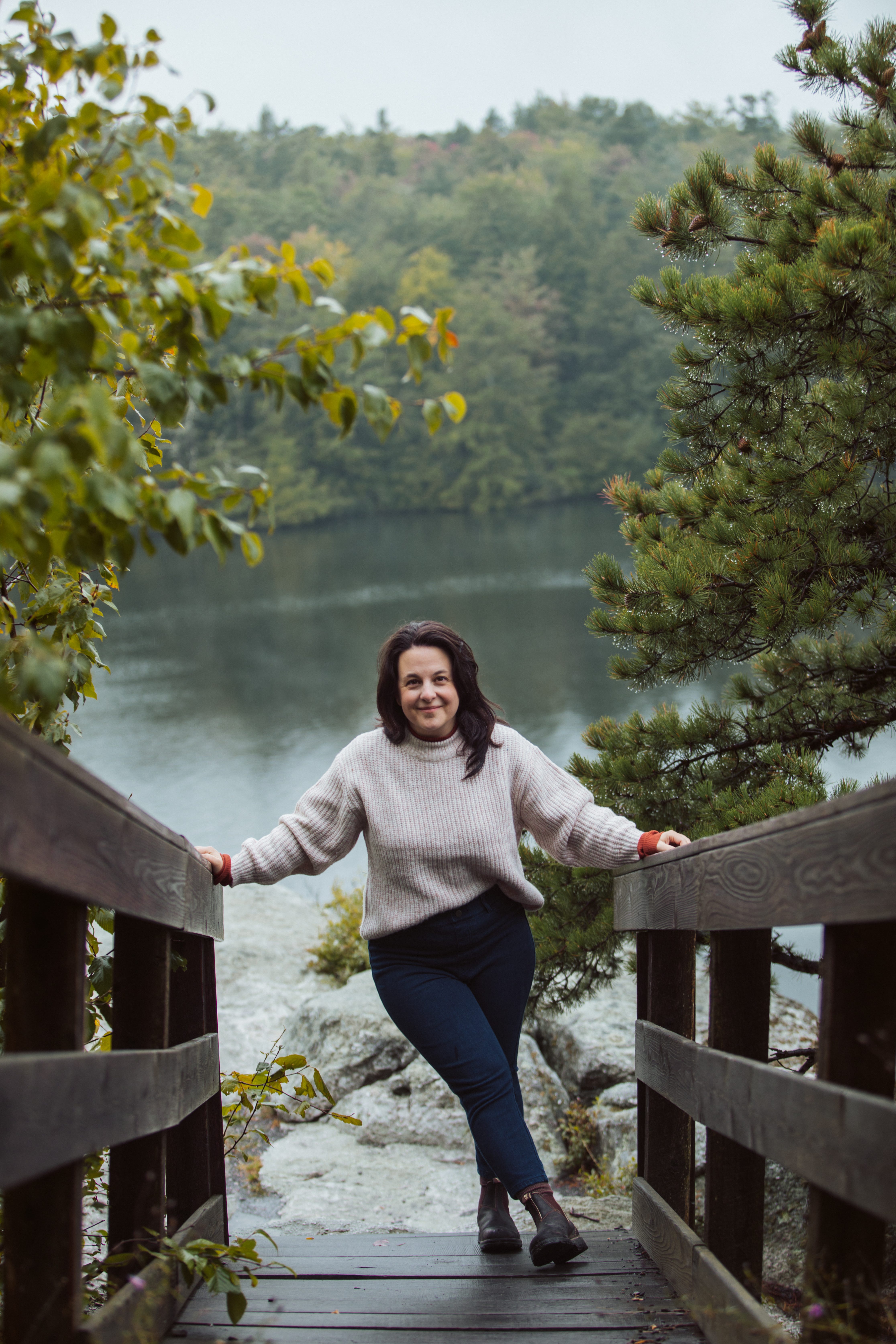
My 1:1 sessions may be an especially good fit for you if you are:
Just starting out in a career in the helping professions (i.e. education, psychology, nursing). Together, we can work to figure out the best work-life balance for you, i.e. making time for dating, exercise, friends and hobbies, and where a mindfulness practice fits into the mix.
Contemplating starting a family. You may be asking deep questions of yourself about how caring for a child would fit into your life, and whether it’s even something you want. I can offer a safe, non-judgmental space to explore these questions, as well as insights, suggested reading and referrals to other helping professionals that you may not have considered before.
Encountering difficulties on the path to family-building (i.e. infertility or loss). It can feel hard and lonely to navigate these struggles alongside pursuing other goals, i.e. marriage, home ownership or career advancement. A partner may empathize but not have the lived experience. We can work together to determine which mindfulness practices and other gentle shifts would support your journey.
Expecting a child or newly postpartum. This enormous life transition can elicit equally enormous feelings. We can work together to co-create a set of practices that allow you to cultivate clarity in moments of chaos, self-compassion in moments of struggle, and loving-kindness in moments of conflict.
Navigating a tough tending season with a child. My particular expertise as a parent and teacher makes me well-positioned to support people through the diagnosis of a child with special needs; the process of exploring early intervention services (and parental supports) in the baby/toddler years; the creation and monitoring of an Individualized Education Plan (IEP) from grades K-12; and helping older kids with learning struggles as they figure out what comes after high school for them. Our 1:1 sessions might focus on mindfulness skills to support your resilience, or on brass-tacks tasks like requesting an evaluation—whatever supports you as a parent/caregiver.
A leader within your family or workplace. You may be juggling a high-stakes set of responsibilities to the collective alongside a personal life that also needs your attention. Together, we can help you clear space for all of it, and release expectations of self and others that no longer serve you.
Caring for someone who is aging or ill. It can be very hard to carve out time for your own self-care and creativity, even when unexpected obstacles arise. Working with me 1:1 allows you to access support at a time that works for you, while also reminding you that you’re not alone in the hard situation you’re facing.
Retired or close to it. After a lifetime of caring for others, it can be overwhelming to suddenly find yourself in a new season, a new role, and a new relationship with yourself and your emotions. Together, we can co-create new, grounding routines for your new life, in a way that is trauma-informed, empowering, and focused on present-moment thriving—rather than an approach that focuses on excessive amounts of “digging up old stuff.”
A storyteller who’s ready to disseminate your own hard-won wisdom. Many people come to me for 1:1 support not only when they’re entering crisis mode but when they’re exiting it. If you’re feeling ready to create your own newsletter, podcast, curriculum or book proposal based on what you’ve learned (or just survived), we can work together to map out what’s needed—whether you’re looking for mind-body tools to ground yourself when you’re trying something new, or brass-tacks developmental editing and introductions to industry pros when the time is right.
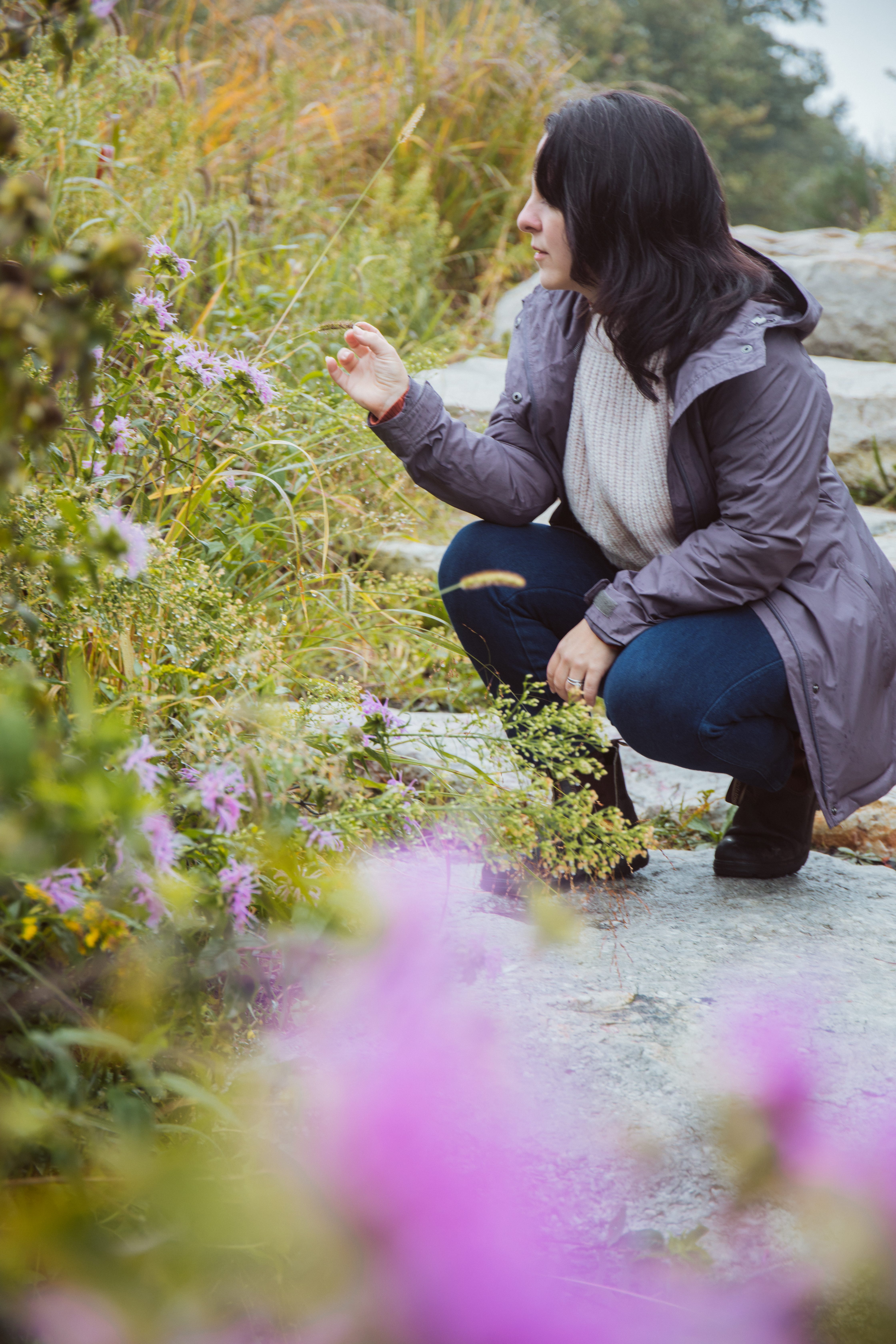
What makes me qualified to support you?
I have hundreds of student success stories to back me up. As a K-12 educator and teacher trainer, I have successfully helped hundreds of children and adults to tap into their innate potential as thinkers, artists and community members. I continue to serve as a sounding board and mentor to many educators in the field.
Over the years, as I’ve added yoga teaching and mindfulness teaching certifications to my resume, I have also guided hundreds of children and adults through the experience of returning to their hearts and bodies, uncovering their deepest longings and callings, and stepping into a more integrated version of themselves–the version of them that this world truly needs.
If they can do it, you can too.
While I’ve got a lot of degrees and certifications to my name, I also have lived experience with many forms of caregiving, and the common struggles caregivers cacn encounter with each. I have lost a beloved sibling to cancer. I have experienced infertility and chronic illness on the path to parenthood, and lost a late-term pregnancy. I have come to terms with a loved one’s special needs as well as my own neurodivergence. I have welcomed family members who are ill and aging into my home.
None of that has been easy. But all of that has prepared me to support you in tapping into your own inner reserves of resilience and wisdom, even as you move through these incredibly hard seasons yourself.
“Caregivers are among the most under-served communities in our world. Ryan’s work centres those who care for others (be they parents, educators or those undertaking other forms of paid or unpaid care)… If you’re looking for increased clarity, space to tend to your inner life and to meet other caregivers who really get it, I can’t recommend Ryan’s work enough.”
— Clare Egan, Life After Trauma
“I’m incredibly grateful for Ryan and the spaces she’s creating for caregivers, especially those supporting neurodivergent families.”
— Adriana DiFazio, Radical Change
“Ryan brings a rare perspective to this conversation. She’s been on both sides of the [Individualized Education Plan] table—first as a teacher in an inclusion classroom, and now as a parent advocating for her own child.”
— Kate Lynch, Atypical Kids, Mindful Parents
“Ryan has some wonderful offerings to support caregivers (of all kinds)… Her intention-based, community-oriented approach is authentic and nourishing.”
— Maia Duerr, The Practice of Life
Why I’m committed to providing parents and caregivers with affordable, evidence-based, personalized support
People who tend other people are often the best people. People like us often have clear values, such as a deep commitment to justice and equity, and sense of respect for the inherent dignity of other human beings.
Where we often need the most help is in remembering that we, too, are humans who deserve justice and to be treated with dignity. This inner work is ours to do—no one else’s. I had to learn this lesson the hard way. It is my hope now to provide you with a more gentle and compassionate container for learning these same lessons.
I truly believe that my life experience—what my Korean friends would call my red thread of destiny, or in yeon—has prepared me for the work I do with parents and caregivers now. My passion for writing and my early training as a journalist has taught me how to gather and sort through information in order to deliver the highest-quality insights, on everything from brain development to Buddhist dharma, to my newsletter audience and small group participants. My experiences with cultivating healthy classroom communities and facilitating restorative justice circles, as an organizer and educator, have taught me how to create spaces of authentic connection and transformation. All of these disparate paths have led me here.
This healing work is, in some ways, an ancestral assignment, one I’m proud to take on. As a person descended from both Eastern European immigrants and Mormon pioneers, I come from a long line of women who were constantly asked to give too much. So many of them were often cut off from ancestral communities, rituals, languages and land. So many of them were surrounded by people who did not see or value their labor as labor. So many of them also created suffering, in communities of marginalized people, from this place of lack and wounding.
I am also the descendant of many men who were told that their value and worth could only be measured by the degree to which they could impress other men—and not how much they cared for their families. Some tried to earn approval through the size of their paychecks. Others abandoned their families to demonstrate devotion to a cause. Very few of them appeared to live happily ever after as a result. By helping men in this era to better care for themselves, their families and their communities, I am helping to heal this intergenerational wound as well.
Acting out of my inherited causes and conditions, I know exactly what it’s like to grapple with burnout in many different care and work settings. I have pushed myself past my physical capacity countless times because I too believed that this would help me earn love and belonging. It took me a long time, and many years of meditation practice and therapy, to begin to break these ancestral patterns. To arrive, finally, in a place where I know in my bones that I have always belonged here.
Now I view easing collective suffering as a collective responsibility, in which we each play a part. When we heal our own wounds, we heal a part of the world. Thus, we each have the responsibility for tapping into our inner resources and intuition in order to bring about the most liberated lives for ourselves that we can. And, none of us can do this alone. We need our communities to support us in burnout, and in grief, so that we can arise again from the ashes, ready to once again take our place in what Mary Oliver calls “the family of things.”
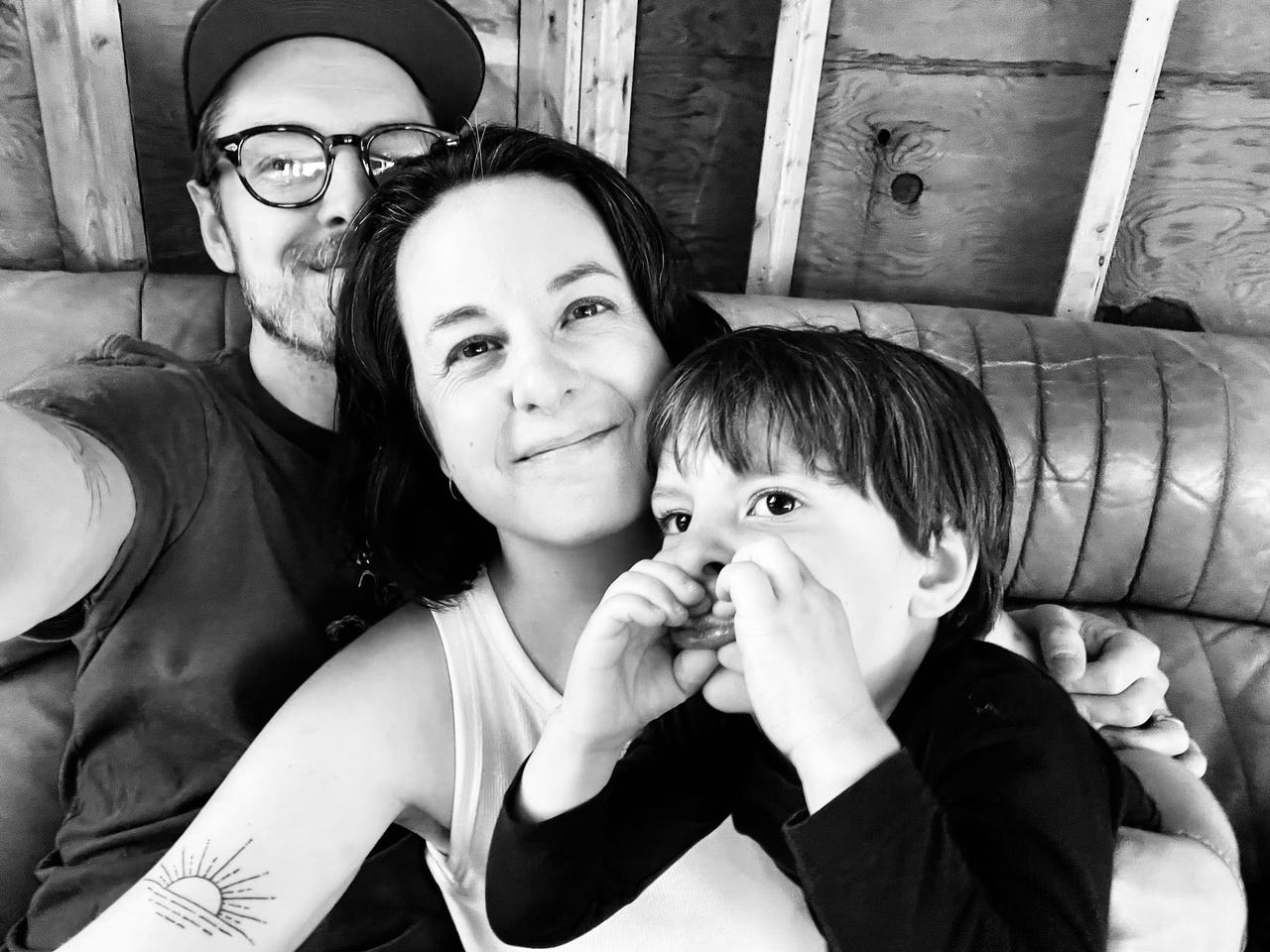
Why focus on mindfulness for parents and caregivers? Why not mindfulness for everyone?
I’ll be completely transparent here. If I wanted to make a lucrative living, I would not be hanging out a shingle and offering mindfulness instruction to caregivers. Capitalism does not care whether most caregivers live or die, much less whether or not we experience moments of happiness, health or liberation. It simply wants us to keep doing what we’re doing, without questioning it. Pushing back against this messaging is not particularly profitable.
But my goal isn’t to get rich. My goal is to be in reciprocity with my community, in ways that benefit me and my family, but also benefit you and our larger world.
My goal at In Tending is to create at least one place in our world where caregivers do not have to earn our sense of belonging through over-giving or overworking.
I want us all to have a place where we can support each other in redefining “success” and “self-worth” for ourselves, in ways that prioritize building connection over extraction.
I want caregivers, particularly those socialized as women, to have access to a group of peers who understand that tenderness and strength can co-exist with rage and sadness—and that, as Tara Brach would say, “it all belongs.”
Ultimately, I see this work as a way to help work with what Joanna Macy calls The Great Turning—a time in our history during which we must shift the way we’re relating to each other and our earth, or risk destroying both.
I dream of a new world in which care isn’t seen as just a private obligation but a shared responsibility and birthright. I dream of a world in which every community member feels prepared to give and receive care, from the very start.
In the meantime, it is my goal to help cultivate a community of people who don’t just want to dream about this better way of living for ourselves, our children, and our elders, but who are ready to do the inner and outer work to begin building it. Right now. In this present moment. Starting right where we are.
That’s why I do what I do.
How my work complements other healing modalities
Whether we are moving through big change, healing from burnout, or moving through grief, I believe we cannot heal and change alone. Nor should we have to. Given this, I value a 1+1=3 approach when it comes to supporting you alongside other folks who may be on your team—such as therapists, teachers and business coaches.
I have years of experience in working in team-based settings and truly believe that it takes a village–not only to raise a child, but a fully whole adult.
My aim is not to replace other community members who are caring for you or your child (nor am I necessarily trained to do so). My “special sauce” lies in helping you identify what is (and isn’t) yours to do, to set and pursue your own intentions with consistent focus and care, to untangle your inner tensions along the way, and to help you re-weave connection in the places where your web of support has been torn.
This isn’t just about “learning to meditate”
While I love and value traditional sitting meditation, I have also had long stretches of time when this practice felt completely inaccessible to me.
For example, doing formal sitting meditation shortly after pregnancy loss felt physically impossible. I was still postpartum. My hips and tailbone ached. It would not have been kind to my body to push it even further than it had been pushed.
I also struggled mentally with sitting practice when I left my last classroom job. The life of a K-12 teacher is a whirlwind of logistics, feelings and activity. I needed to decelerate my speed slowly, through meditative movement modalities like yoga, dance and hiking. These practices delivered many of the same benefits as my sitting practice, at a time when I really needed it.
My own imperfections and hiccups on the path have taught me that if you are not a lifelong monastic, but just a regular-ass person trying to pay the bills and get the kids to bed, what your practice for inner tending looks like is much less important than how it feels to you.
So, in my 1:1 work and group work, I almost always offer alternatives to traditional meditation, because there have been many times in my life where I too needed this flexibility. My invitation to you is to learn to discern what practices support your mind and body, and your intentions, in this moment.
This isn’t about cultivating a “religious” or “secular” belief system, but about experiencing universal basic goodness
I believe that there is basic goodness (also known as “Buddha mind,” “Christ consciousness” or “Self energy”) inside each person, and that it is possible to uncover these gifts and bring them out into the light. Right now, in this very moment.
Is this a religious view? Some might say so. Are there many people who self-identify as “secular” who also believe this? You’ve probably met many.
This work isn’t about telling you what to believe. It’s about connecting you to what’s already true—that you’re good enough already, just as you are.
Often when I tell people this, they will bring up any number of objections. They—or someone else—is just too busy to practice in the first place, or too broken to experience the benefits of practice even if they tried.
Here’s the thing: the teachers from whom I have learned to teach mindfulness have brought this work to everyone from elementary school students to convicted murderers sitting on death row. The leaders whom I follow for best practices and teaching insights have arrived at their conclusions by studying traumatized veterans, working with sexual assault survivors, and mediating conflict between people living on opposite sides of a devastating war. The work I have done in my own career has helped to foster transformation in many adults and children, even those who are learning-disabled, recent immigrants, and/or housing and food insecure.
So I come to my views honestly when it comes to believing in the immense potential that lives inside of each person, no matter what their personal histories or present-moment circumstances may be. My views are a part of the embodied knowing that I will bring to our sessions when you and I work together. I will never tell you th
at you have to wait until things are “less crazy around here” to get started on tending your interior life. Nor are you uniquely f@#d forever.
Deeper insight is your birthright. I want to help you claim it. Right now.
The bud
stands for all things,
even for those things that don’t flower, for everything flowers, from within, of self-
blessing;
though sometimes it is necessary
to reteach a thing its loveliness, to put a hand on the brow
of the flower
and retell it in words and in touch
it is lovely
until it flowers again from within, of self-
blessing
– Galway Kinnell, from Saint Francis and the Sow
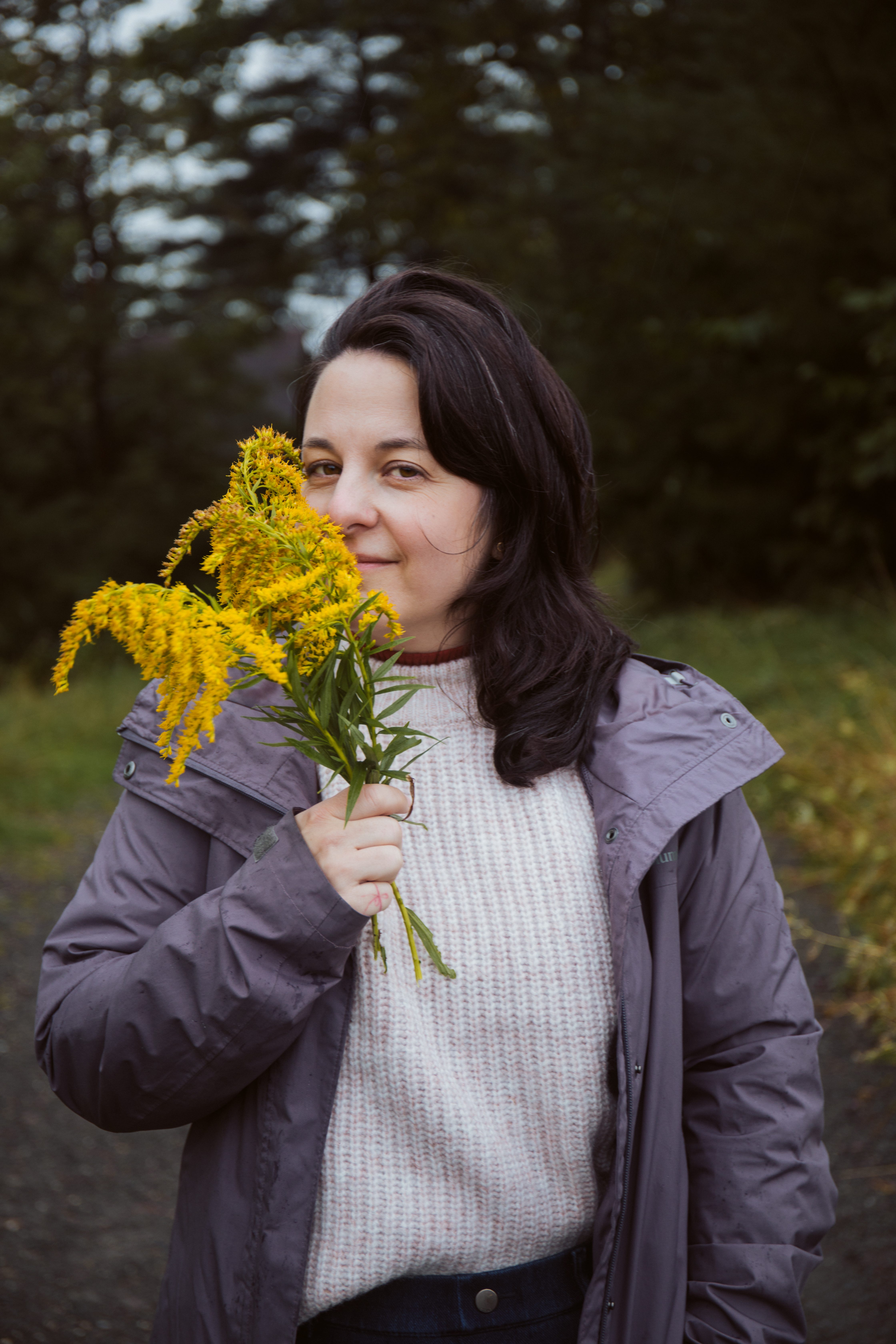
What I want most for you
I want most for you to experience clarity, connection and creativity in every session that we spend together, and to receive insights about how to do so on your own every time you read something I’ve written on In Tending.
I want you to build your confidence over time in your own basic goodness, and in your ability to break free of the patterns that are leading you time and time again into a place of suffering.
I want you to believe that it is possible for you to live a happier, healthier and more liberated life than the one you are living now, and to feel supported as you do the work to cultivate that life–something that only you can do.
And, I want you to know that there are countless others doing this work alongside you who would love to meet you. Together, we can join together to build a world in which caregivers receive the same compassion they give to others, without having to earn it.
How you’ll feel after doing this work
Often, when people are leaving a circle or 1:1 conversation with me, they will use the word “nourished” to describe how they’re feeling.
While I can’t know exactly what it’s like to be in their shoes, when they describe it, it sounds like the feeling we get when we’ve eaten a meal prepared by someone who really cares.
The feeling we get when we’ve just left a gathering where everyone laughed, and maybe even cried, and told the truth.
The feeling we get when we’ve walked long enough in the woods, or the desert canyon, or Central Park.
It’s perspective. It’s belonging. It’s the understanding that everything is actually a little more okay than we thought it would be.
I don’t create these feelings in you, of course. But I work very hard to create the kinds of spaces in which you can experience these kinds of universal emotions, inside of your own heart and mind.
I also create, I hope, an insatiable appetite in you for more of the things that truly nourish you. Because I believe that each of us deserves that.
What a great offering!